494 words · 2 min
Tupac: Resurrection (2003)
Oscar-nominated 2003 documentary by Lauren Lazin in which Tupac tells his own story, built entirely from his interviews. Co-produced by Afeni Shakur's Amaru.
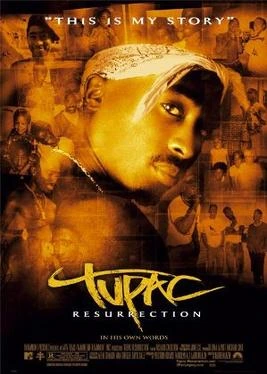
- Director
- Lauren Lazin
- Producers
- Lauren Lazin, Preston Holmes, Karolyn Ali; MTV Films and Amaru Entertainment
- Distributor
- Paramount Pictures
- Premiere
- January 22, 2003, Sundance Film Festival
- US theatrical release
- November 14, 2003
- Running time
- about 112 minutes
- DVD
- Paramount Home Video (US release on June 15, 2004)
Tupac: Resurrection is the best-known documentary about Tupac Shakur and the only one to earn an Oscar nomination. Its central idea is simple and bold: no narrator, no talking heads explaining who he was. Tupac tells the story himself, stitched together from interviews he gave between his teenage years and 1996.
Since it is a documentary, it is filed here with the documentaries.
Facts and figures
Amaru Entertainment is the company of Tupac’s mother Afeni Shakur, who ran his estate. That makes this an authorized film, with access to home videos, concert footage, poems and journal pages that had never been shown before.
What it covers
The film moves through Tupac’s life in order: a childhood with a mother who had stood trial as a Black Panther and later fought addiction, the years in Baltimore and Marin City, the route through Digital Underground to solo stardom and acting. Then the ruptures: court cases, prison, the 1994 shooting, the Death Row period under Suge Knight, and his death in Las Vegas in 1996.
Because the voice is always his own, the film plays like an autobiography. He talks about poetry, his friendship with Jada Pinkett, the media and his own mistakes. Roger Ebert singled this out: Tupac’s narration doesn’t sound like the usual celebrity Q&A but like written prose.
Reception
The film grossed about $7.7 million in North America, a strong result for a documentary. At the 2005 Academy Awards it was nominated for Best Documentary Feature; the award went to Born into Brothels. It holds 78 percent positive reviews on Rotten Tomatoes and a Metacritic score of 66.
The most common objection: Resurrection is a tribute, not an investigation. With the estate on board and Tupac explaining himself, difficult subjects such as the 1994 sexual abuse case or his part in the East Coast feud remain largely his own account. The Rotten Tomatoes consensus calls it one-sided but carried by Tupac’s charisma.
Soundtrack and book
A soundtrack came out on November 11, 2003, on Amaru and Interscope, executive produced by Afeni Shakur and Eminem. It mixes known tracks with newly assembled songs such as Runnin’ (Dying to Live) with The Notorious B.I.G. and One Day at a Time with Eminem and the Outlawz, and debuted at No. 2 on the Billboard 200. More: Tupac: Resurrection soundtrack. A companion book, Tupac: Resurrection 1971-1996, was published alongside it.
Verdict
If you only watch one film about Tupac, make it this one. It is serious, carefully edited and full of original material. Just keep in mind that it shows Tupac as he saw himself; for critical voices and the murder investigations, you need other films.
People in this text
Afeni Shakur: Panther, Mother, Keeper of the EstateSuge KnightJada Pinkett