9 entries
Where Tupac Lived, Studied and Is Remembered
From East Harlem via Baltimore and Marin City to Las Vegas and Lumberton: Tupac's life stations in the order of his life, as of October 2026.
Tupac Shakur lived in a few places for a long time and in many only briefly. Until he was 17 the family kept moving: within New York, then to Baltimore, then across the whole country to California. Anyone looking for his traces rarely stands in front of monuments, but mostly in ordinary residential neighborhoods, outside schools or on street corners. This overview arranges the stations in the order of his life. Private home addresses are left out; the street, the neighborhood and a note on what can be seen there as of October 2026 are enough.
Five Stations from East Harlem to North Carolina
- East Harlem and the Bronx (1971 to 1984): Tupac was born in East Harlem on June 16, 1971 (Amsterdam News); other claims, such as the Bronx given by the New York Times in 1996, are wrong. In the 1970s the family often moved between Harlem and the Bronx. As a child he first stood on a stage with a theater group in Harlem. More on East Harlem and the Bronx.
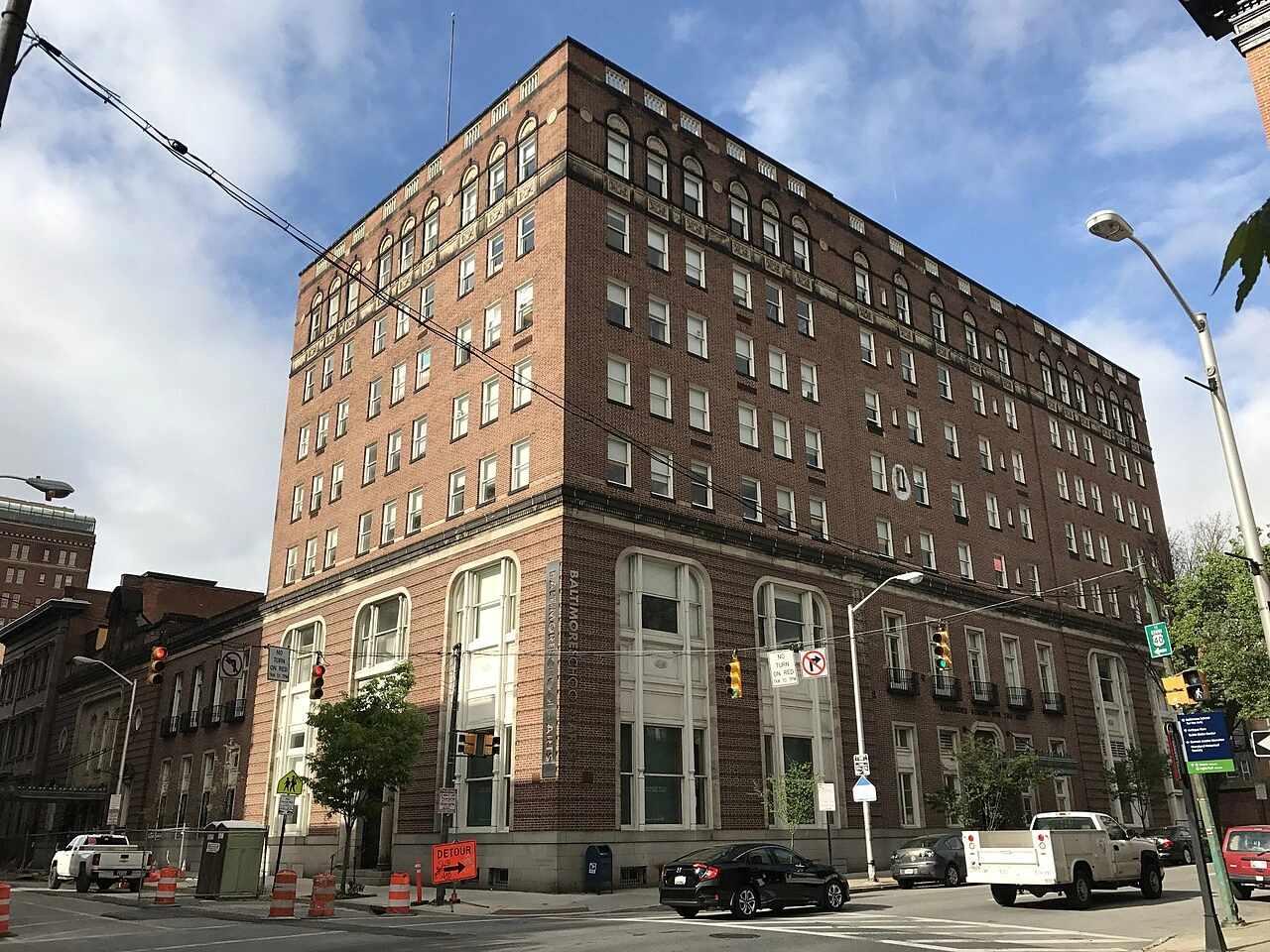
- Baltimore (1984 to 1988): Tupac came to Baltimore at 13 and left at 17. The family lived on Greenmount Avenue in the Pen Lucy neighborhood in the north of the city; at the Baltimore School for the Arts he studied acting, poetry and ballet and met Jada Pinkett. Since May 8, 2026, a stretch of Greenmount Avenue has carried the name “Tupac Shakur Way” (WTOP). More on Baltimore and, for the school, on Baltimore School for the Arts.
- Marin City (1988 to about 1990): In the summer of 1988, at 17, Tupac arrived in the community north of the Golden Gate Bridge, public housing in the valley, villas on the hillsides. Here he met Leila Steinberg, wrote a large part of his poems and found his way to Digital Underground. The Golden Gate Village housing complex has been listed on the National Register of Historic Places since 2017 (Sausalito Historical Society). More on Marin City.
- Las Vegas (1996): At the intersection of East Flamingo Road and Koval Lane, a few minutes’ walk east of the Strip, Tupac was shot on September 7, 1996, at about 11:15 p.m. There is no memorial there; fans describe two utility poles covered with messages. More on Flamingo Road and Koval Lane.
- Lumberton, North Carolina: His mother Afeni Shakur was born here in 1947 and returned here in 2002. According to Jeff Pearlman’s research, she had Tupac’s ashes buried on her property on the edge of town; Pearlman saw a headstone during his visit in March 2024 (The Robesonian). More on Lumberton.
Other Places That Belong to His Story
Other places belong to his story as well; some have their own pages, others are described in detail on pages in other sections.
- Oakland: Here police stopped him on October 17, 1991, for crossing the street against a red light and put him in a chokehold; he sued the city (see Legal Cases). Since 2023 a stretch of MacArthur Boulevard has also been called “Tupac Shakur Way” (The Source). More under Oakland.
- New York 1993 to 1995: At the Parker Meridien hotel, the criminal case that ended in a guilty verdict began in November 1993; on November 30, 1994, one day before the verdict, Tupac was shot in the lobby of Quad Studio in Times Square (New York Times). He served his sentence on Rikers Island and, from March 1995, at Clinton Correctional Facility in Dannemora near the Canadian border, until he was released on bail on October 12, 1995 (AP). More under Shooting 1994.
- Los Angeles 1995 and 1996: After his release Tupac lived and worked in the greater Los Angeles area. On July 4, 1996, he performed his last major concert at the House of Blues on the Sunset Strip (see Discography). More under Los Angeles.
- Las Vegas, MGM Grand and the hospital: Before the shooting there was a fight with Orlando Anderson in the lobby of the MGM Grand (MGM Grand). Tupac died on September 13, 1996, at University Medical Center in Las Vegas (Las Vegas Sun, The Last Week).
- Stone Mountain, Georgia: Afeni Shakur’s foundation ran an arts center for young people here from 2005 to 2015 (Rolling Stone, Foundation and Arts Center).
- Studios: Where Tupac recorded, from Richmond in the Bay Area to Quad Studios in Times Square and Can-Am Studios in Tarzana, is covered on the page Studios.
- Herford, Germany: Since 2005, Paolo Chiasera’s concrete figure of Tupac on a column has stood outside the MARTa museum (NRW-Skulptur, The Statue in Herford).
Official Monuments Came Late
Official places of remembrance are rare and recent. There are street signs in Oakland (2023) and Baltimore (2026), the star on the Hollywood Walk of Fame since 2023 and figures in Stone Mountain and Herford; the page Monuments puts them in context.
The inclusion in the Library of Congress’s sound archive and in a Vatican playlist is covered by Library of Congress and the Vatican, the museum exhibitions by Exhibitions and Museums, the honors by Rock and Roll Hall of Fame, Hollywood Walk of Fame and Grammys.
Residential Neighborhoods and Private Land Are Not Tourist Sites
Most of these stations are residential areas, schools or private property where other people live today. What is publicly accessible is named on the individual pages: the street signs in Baltimore and Oakland, the star in Hollywood, the intersection in Las Vegas, the figure in Herford. A grave on private land is not a tourist destination. The Biography tells the whole course of his life.
1979
Baltimore School for the Arts: Tupac's Theater School
Ballet, Shakespeare, and friendship with Jada Pinkett: At the Baltimore School for the Arts, Tupac learned the craft for stage and studio.
1971
East Harlem and the Bronx: Tupac's Childhood in New York
Born in East Harlem, raised between Harlem and the Bronx: the places, schools, and theater stages from Tupac's first 13 years of life.
1996
Flamingo Road and Koval Lane: The Crime Scene Without a Memorial
No sign, no memorial, just two painted utility poles: how the corner of Flamingo and Koval became an unofficial memorial site for Tupac.
1994
Los Angeles: Tupac's last home
A studio in Tarzana, a stage on the Sunset Strip, a star on Hollywood Boulevard: the places of Tupac's last years in Los Angeles.
1947
Lumberton: Afeni's Hometown and Tupac's Grave
A headstone behind tall grass: How Tupac's ashes came to Afeni's 56-acre estate in Lumberton, and why the 2006 burial in Soweto fell through.
1988
Marin City: Tupac's Bay Area Years
Between public housing and million-dollar mansions: How Tupac Shakur went from theater student to Digital Underground rapper in Marin City from 1988.
1989
Oakland: the city where 2Pac was born
His first apartment, Digital Underground, a lawsuit against the police, a street sign: in Oakland the poet Tupac became the rapper 2Pac.
1990
Studios: Where Tupac Recorded
From Starlight Sound in Richmond to Quad Studios in Times Square and Can-Am in Tarzana: the documented recording sites and what was made there.
1984
Tupac in Baltimore: Pen Lucy, Library Rap and “Tupac Shakur Way”
From his first rhyme in Pen Lucy to art school: How Baltimore shaped Tupac from 1984 to 1988, and how the city honored him with a street in 2026.