United Tupac.Com · Biography
1971 to 1996
A life in seventeen chapters
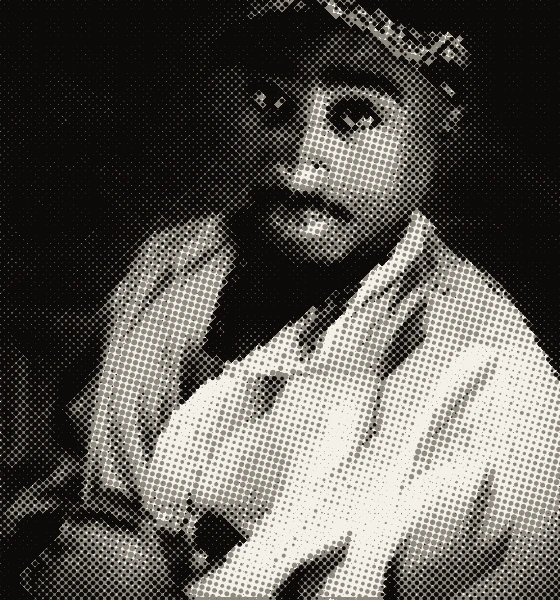
United Tupac.Com
Tupac
Amaru
Shakur
June 16, 1971 to September 13, 1996
A biography in seventeen chapters.
With figures, a year overview and sources.
United-Tupac.Com
Fan site since 2002 · Updated October 9, 2026
Contents
“Did u hear about the rose that grew from a crack in the concrete?”
In the spring of 1971 a pregnant woman with no legal training stood up in a New York courtroom to defend herself, and she won. Five weeks after the acquittal her son was born. Tupac Amaru Shakur went on to live 25 years, and in that time he was a drama student, a backup dancer, a rapper, a film actor, a prison inmate and one of the best-selling musicians of his generation. He wrote about poverty, police violence and mothers raising children alone, and at the same time he lived out the very image his critics warned about.
This biography describes the political family he was born into and the breaks of his last years. It reaches beyond 1996: to the releases after his death and to the verdict of 2026.
Overview
The Years
24 years mentioned in this biography, from 1968 to 2026. Each leads to the chapter where it first appears.
- 1968I · A Mother Who Defended Herself
- 1969I · A Mother Who Defended Herself
- 1971I · A Mother Who Defended Herself
- 1975III · A Childhood Between Harlem and the Most Wanted List
- 1981III · A Childhood Between Harlem and the Most Wanted List
- 1984III · A Childhood Between Harlem and the Most Wanted List
- 1986III · A Childhood Between Harlem and the Most Wanted List
- 1988III · A Childhood Between Harlem and the Most Wanted List
- 1989V · Marin City
- 1990VI · From Roadie to 2Pac
- 1991V · Marin City
- 1992VII · A Debut Becomes a Political Issue
- 1993VIII · Three Film Roles in Three Years
- 1994VIII · Three Film Roles in Three Years
- 1995VII · A Debut Becomes a Political Issue
- 1996XIII · Two Albums in One Stroke
- 1997XV · The Albums After His Death
- 2003XV · The Albums After His Death
- 2010XVI · Honors and Aftermath
- 2012XVI · Honors and Aftermath
- 2016XV · The Albums After His Death
- 2017XVI · Honors and Aftermath
- 2023XVI · Honors and Aftermath
- 2026XVI · Honors and Aftermath
I
A Mother Who Defended Herself
The story starts with Afeni Shakur. She was born Alice Faye Williams in Lumberton, North Carolina, in 1947 and moved to the South Bronx as a child. In the late 1960s she read her way into Black history, took the Yoruba name Afeni and joined the Black Panther Party in Harlem in 1968. That November she married Lumumba Shakur, whose family was so well known in radical circles that others adopted the Shakur name as a sign of allegiance.
On April 2, 1969, New York police arrested 21 Panthers, Afeni among them. The charge: plotting attacks on police stations and public buildings. The "Panther 21" case became the longest and costliest criminal trial in New York State history up to that point. In January 1970 Afeni walked out on a $100,000 bond that supporters had raised.
During that time she became pregnant. The father was Billy Garland, another Panther, not her husband, who was in jail. When co-defendants skipped bail, the court revoked hers, and she spent most of the pregnancy back behind bars. In court she represented herself, cross-examining among others an undercover officer. On May 13, 1971, the jury acquitted all 13 remaining defendants on all 156 counts. Deliberations had taken roughly an hour and a half.
II
A Name to Hide Behind
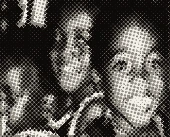
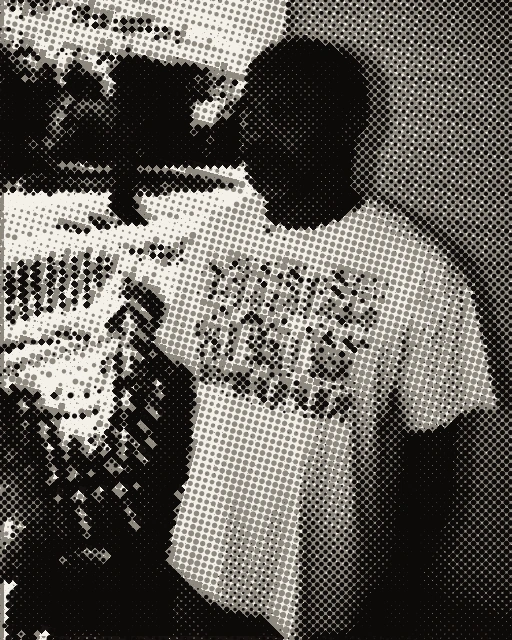
A little over a month later, on June 16, 1971, Afeni's son was born in East Harlem. The often-repeated claim that he was born in Brooklyn is wrong. On the birth certificate Afeni entered the name Lesane Parish Crooks (listed there as "Parish Lesane Crooks"). She borrowed the surname from her friend and former cellmate Carol Crooks. The idea was that the child should not be instantly recognizable as a "Panther baby."
About a year later the boy received the name the world knows: Tupac Amaru Shakur, after the Peruvian rebel Túpac Amaru II, whom the Spanish colonial authorities had executed in 1781. Afeni later explained that she wanted to give him the name of revolutionary, indigenous people. He was to know that he belonged to a world culture and not just to one neighborhood. Where his other names came from is covered on the page Names and aliases.
Afeni's marriage to Lumumba fell apart soon after the birth. Billy Garland played no part in Tupac's childhood, and for years Tupac believed his biological father was dead.
III
A Childhood Between Harlem and the Most Wanted List
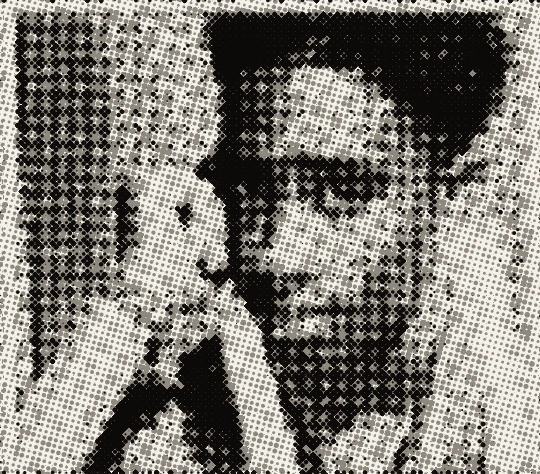
In the 1970s the family moved often, between apartments in Harlem and the Bronx. Their circle included people whose names became part of the family story: Assata Shakur is described as Tupac's godmother, the Panther Geronimo Pratt as his godfather. In 1975 Afeni married the activist and acupuncturist Mutulu Shakur, and that same year Tupac's half-sister Sekyiwa was born. Mutulu's son Maurice Harding, later known as the rapper Mopreme Shakur, became Tupac's stepbrother.
Things never settled down. Afeni and Mutulu split in 1982, and Mutulu became a wanted man. He was considered the planner of the armed robbery of a Brink's armored truck in Nanuet, New York, on October 20, 1981, in which a guard and two police officers were killed. In 1982 the FBI put him on its Ten Most Wanted list. He was not caught until February 1986 and was sentenced to 60 years in 1988.
Work was hard for Afeni to find in those years, and she slid into drug addiction. Tupac escaped into writing and onto the stage. At twelve he joined the 127th Street Repertory Ensemble in Harlem. In 1984 he played Travis Younger in A Raisin in the Sun at the Apollo Theater, in a benefit performance for Jesse Jackson's presidential campaign.
IV
Baltimore: Theater, Ballet and First Rhymes
Later in 1984 Afeni moved with Tupac and Sekyiwa to Baltimore, into a ground-floor apartment at 3955 Greenmount Avenue in the Pen Lucy neighborhood. Tupac was 13 and in eighth grade at Roland Park Middle School. On the school bus he met the beatboxer Dana "Mouse" Smith, and the two wrote rhymes every afternoon. In November 1985 they won a rap contest held by the Enoch Pratt Free Library. Tupac's handwritten "Library Rap" is now in the library's special collections.
After a year at Paul Laurence Dunbar High School, Tupac auditioned for the Baltimore School for the Arts and was accepted as a theater student. He later called his two years there, roughly 1986 to 1988, a happy time. He performed Shakespeare, studied Ibsen and Sam Shepard, took ballet and danced the Mouse King in The Nutcracker. His teacher Donald Hicken remembered an unusually charismatic student who spent his lunch breaks reading in the library.
This is where he met Jada Pinkett. Their friendship lasted until his death, and he wrote poems for her, including Jada. With friends he formed the group Born Busy, whose tapes are considered his first recordings; on the mic he went by MC New York. In 2006 Jada Pinkett Smith gave the school $1 million, and its new theater was named after Tupac.
V
Marin City
In the summer of 1988, just before his senior year, Tupac had to leave Baltimore. Afeni sent the children to Marin City near San Francisco, where an old Panther comrade was to look after them, and followed later. Marin City was a poor enclave in the middle of one of the richest corners of California.
Tupac enrolled at Tamalpais High School in neighboring Mill Valley. One teacher called his reading of Shakespeare's Othello the best she had ever heard. At home, though, things went badly. Afeni's crack addiction got worse, Tupac moved out, stayed with friends for stretches and, by his own account, sold drugs to buy food. He never graduated, though he later earned a GED.
In 1989 he started attending Leila Steinberg's poetry classes in Oakland. She became his mentor and first manager, booked shows for his group Strictly Dope with rapper Ray Luv and introduced him to Atron Gregory, manager of Digital Underground. The Strictly Dope recordings from those years were released in 2007 as Beginnings: The Lost Tapes 1988-1991.
VI
From Roadie to 2Pac
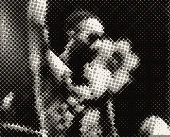
In 1990 Atron Gregory brought him into Digital Underground, the playful Oakland funk-rap crew led by Shock G, as a roadie and dancer. On tour with Public Enemy he became friends with Treach of Naughty by Nature.
He did not stay in the background for long. In January 1991 the single Same Song came out, and on it a rapper called 2Pac was heard for the first time. The song was featured in the film Nothing But Trouble, in which Digital Underground made a cameo: Tupac's first moment on screen. Through the group he also met the Queens rapper Randy "Stretch" Walker, with whom he would often perform over the next few years.
Soon he had a deal of his own. Through Gregory's company Tupac landed at Interscope Records, a young Los Angeles label that handled his releases until his move to Death Row.
VII
A Debut Becomes a Political Issue
In October 1991, shortly before his first album, two Oakland police officers stopped him for jaywalking. By his account they choked him, threw him to the ground and slammed his head against the pavement. He sued the city for $10 million and received about $43,000 in a settlement.
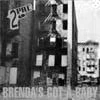
On November 12, 1991, 2Pacalypse Now came out, an album about racism, police brutality, poverty and teenage pregnancy. Brenda's Got a Baby tells the story of a twelve-year-old girl who leaves her newborn in the trash; Tupac had read about such a case in the paper. The record was no hit: No. 64 on the Billboard 200, certified gold only in 1995.
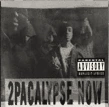
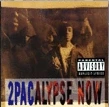
What made it known was a scandal. In April 1992, 19-year-old Ronald Ray Howard shot and killed a Texas state trooper, and his lawyer blamed the music of 2Pacalypse Now. In September 1992 Vice President Dan Quayle said of the album: "There's no reason for a record like this to be released. It has no place in our society." Tupac replied that he had wanted to rap about what affected young Black men, and suddenly found himself everybody's target.
VIII
Three Film Roles in Three Years
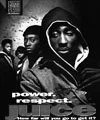
His film career began at the same time, almost by accident. Tupac tagged along with bandmate Money-B to an audition and asked to read himself. He won the part of Roland Bishop in Juice, released on January 17, 1992. Bishop, a Harlem teenager who spins out of control after a robbery, was the strongest character in the film. In Rolling Stone, Peter Travers called him its most magnetic presence.
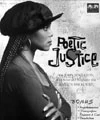
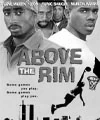
In 1993 he played the mail carrier Lucky opposite Janet Jackson in John Singleton's Poetic Justice, and in 1994 the gangster Birdie in Above the Rim. Other roles slipped away. He was dropped from Menace II Society after assaulting director Allen Hughes, and cut from Singleton's Higher Learning after an arrest because the studio would not back him.
Musically he followed up in February 1993. Strictly 4 My N.I.G.G.A.Z. entered the chart at No. 24, went platinum and included I Get Around and Keep Ya Head Up, an anthem to the dignity of women. Tupac read the title as "Never Ignorant, Getting Goals Accomplished."
THUG LIFE took shape around the same time, political at its root: an indictment of a society that abandons its children. In 1992 Tupac had the two words tattooed across his stomach. With Mutulu Shakur he wrote a code of conduct for the street, and he founded a group of the same name, whose only album, Thug Life: Volume 1, came out in September 1994.
In 1993, in Los Angeles, he met a young Brooklyn rapper named Christopher Wallace, soon to be known as The Notorious B.I.G. They became friends and visited each other in New York and Los Angeles, and Tupac brought Biggie on stage at his own shows. The friendship broke apart after the 1994 robbery.
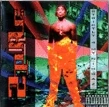
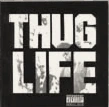
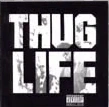
Picture pages
Picture Selection
Sixteen pictures from the fan material of united-tupac.com and thuglove.de, small for years, tinted and watermarked. Here they appear in grayscale and at their true size, in four strips of four pictures each.
No picture in this book is shown larger than it is.
Framed in red: shown large in the biography
Crossed out: too blurry, not used
 1
1 2
2 3Fig. 15
 45Fig. 56Fig. 47Fig. 7
 89Fig. 210Fig. 1
 11Fig. 29
 12
12 13
13 14
14 15Fig. 21
 16
16IX
Charges and Trials
From 1993 on, the cases piled up. Some ended in convictions, others in acquittals or dropped charges. The main cases:
For the assault on Allen Hughes, Tupac served 15 days in jail in early 1994. At a Michigan State University concert in April 1993 he was accused of going after another rapper with a baseball bat; in September 1994 he pleaded guilty to a misdemeanor. A death weighed more heavily. At a festival in Marin City in August 1992, six-year-old Qa'id Walker-Teal was killed by a bullet from a gun registered to Tupac. No one was charged, and the family's civil suit was settled in 1995.
On October 31, 1993, in Atlanta, Tupac shot two men who turned out to be off-duty police officers, the brothers Mark and Scott Whitwell. Accounts conflicted. Some witnesses said the two had been harassing a Black motorist and that Mark Whitwell fired first. Scott Whitwell admitted carrying a gun taken from a police evidence room. Prosecutors dropped all charges, against both sides.
The most serious case came out of New York. In November 1993 a 19-year-old woman accused Tupac and three other men of sexually assaulting her in his hotel room. Tupac denied it. On December 1, 1994, the jury acquitted him of sodomy and weapons charges but convicted him on three counts of first-degree sexual abuse. The woman stood by her account; a later civil suit was settled.
X
Shots in a Times Square Lobby
Shortly after midnight on November 30, 1994, while the jury was still deliberating, Tupac went to Quad Recording Studios in Times Square to record a verse for another artist. In the lobby three armed men robbed him. He fought back, was beaten and shot, and lost jewelry worth around $40,000. He himself said he had been hit five times.
After emergency surgery he checked himself out of the hospital against medical advice. The next day he sat in court in a wheelchair, bandaged. He spent the following weeks recovering at actress Jasmine Guy's home, guarded by the Fruit of Islam and former Panthers. After the shooting Billy Garland got back in touch, and father and son saw each other for the first time since Tupac was a small child.
Tupac was convinced he had been set up. He suspected people from the Bad Boy camp who were in the building that night; they denied it. In 2011 a man imprisoned in New York claimed to have been one of the robbers. The robbery never came before a court. The full story is on the 1994 shooting page.
XI
Number One from a Cell
On December 23, 1994, Tupac turned himself in, and early in 1995 he went to Rikers Island. On February 7, 1995, a judge sentenced him to one and a half to four and a half years. In March he was transferred to Clinton Correctional Facility in Dannemora, in the far north of the state.
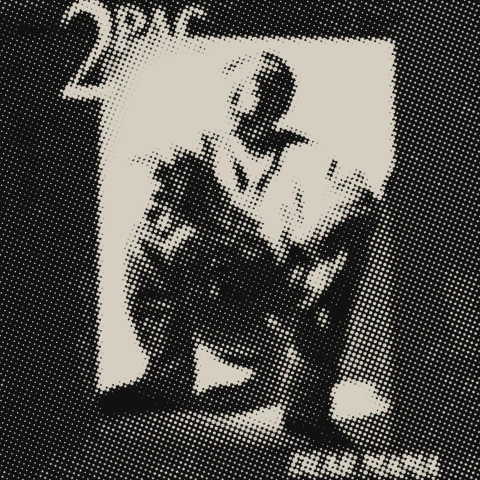
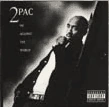
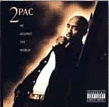
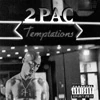
That is where his first No. 1 reached him. Me Against the World, recorded before his incarceration, came out on March 14, 1995, and debuted at No. 1 on the Billboard 200. It made Tupac the first artist to top the chart while in prison. It is his most personal record. Dear Mama speaks without varnish about Afeni's addiction and her love; So Many Tears and Temptations followed as singles. In the Temptations video, friends such as Jada Pinkett, Ice-T and Coolio stood in for him.
In prison he read a great deal again, including Machiavelli's The Prince and Sun Tzu's The Art of War. On April 29, 1995, he married his girlfriend Keisha Morris there, a pre-law student; the marriage was annulled about ten months later. In interviews he said he was done with THUG LIFE.
XII
Freedom for $1.4 Million
Legal bills had drained him, and Afeni was about to lose her house. Through Keisha Morris, contact was made with Suge Knight, head of Death Row Records in Los Angeles, the label of Dr. Dre and Snoop Dogg. Knight visited Tupac in Dannemora. On October 12, 1995, Tupac walked free after Death Row put up a $1.4 million bond; his appeal continued. The price was a contract for three albums.
That same night he was in a Los Angeles studio. The months that followed were the most productive of his life: song after song, film shoots and videos, and a new crew around him, the Outlawz. Journalist Kevin Powell, who had interviewed him on Rikers, found him more aggressive after his release, almost transformed.
His work rate became famous. Friends and producers later described him writing and recording several songs in a day, often in two studio rooms at once, then heading straight to a film set. Much of what he recorded in those eleven months only came out after his death. He gave the Outlawz noms de guerre taken from dictators and enemies of the United States: Kadafi, Napoleon, Hussein Fatal, E.D.I. Mean. Before long he was calling himself Makaveli.
XIII
Two Albums in One Stroke
On February 13, 1996, All Eyez on Me came out. The set is widely described as hip-hop's first double album, and it settled two of the three albums he owed in one stroke. It sold 566,000 copies in its first week, was five times platinum by April 1996 and went diamond (ten times platinum) in 2014. California Love with Dr. Dre and How Do U Want It both reached No. 1 on the Billboard Hot 100.
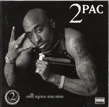
The tone was different from Me Against the World: louder, more triumphant, often a party, often a threat. By now Tupac was openly at war with Bad Boy. He accused The Notorious B.I.G. and Sean Combs of knowing about the Quad robbery and in June 1996 released the diss track Hit 'Em Up. The two camps had already clashed at the Soul Train Music Awards in March 1996. The dispute between two labels on opposite coasts turned into a feud that the media and fans stoked further.
1996 was crowded. Tupac attended the Grammys, flew to Milan in June with his girlfriend Kidada Jones for the fashion shows and played the July 4 show in Los Angeles later released as Live at the House of Blues. He shot Gridlock'd and Gang Related, and over the summer, under his new name Makaveli, he recorded another album in a matter of days.
XIV
Seven Days in Las Vegas
On September 7, 1996, Tupac and Suge Knight watched Mike Tyson fight Bruce Seldon at the MGM Grand in Las Vegas. In the hotel lobby a Death Row associate pointed out Orlando Anderson, a member of the South Side Compton Crips who had tried to take his Death Row chain months earlier. Tupac and Knight's entourage beat Anderson up, and a security camera recorded the scene.
Later that night Knight and Tupac set off in a black BMW 750iL toward Knight's Club 662, followed by a convoy. Around 11:15 p.m. they stopped at a red light at East Flamingo Road and Koval Lane, outside the Maxim Hotel. A white Cadillac pulled up on the right, and shots came from the back seat. Tupac was hit four times: twice in the chest, once in the arm and once in the thigh. Knight was grazed in the head by fragments. Bodyguard Frank Alexander was not in the car.
At University Medical Center Tupac underwent several operations, lost his right lung and was kept in a medically induced coma. On Friday, September 13, 1996, at 4:03 p.m., he died of respiratory failure and cardiac arrest caused by his gunshot wounds. He was 25. His body was cremated the next day. The night itself is covered in detail on the 1996 shooting page.
XV
The Albums After His Death
 R U Still Down?1997
 Greatest Hits1998
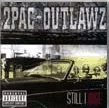 Still I Rise1999
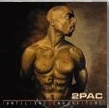 Until the End of Time2001
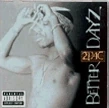 Better Dayz2002
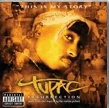 Tupac: Resurrection2003
Tupac left behind hundreds of unreleased recordings. As early as November 5, 1996, The Don Killuminati: The 7 Day Theory, recorded the previous summer, came out under the name Makaveli and debuted at No. 1. It was followed by R U Still Down? (Remember Me) (1997), Greatest Hits (1998), Still I Rise with the Outlawz (1999), Until the End of Time (2001), Better Dayz (2002), the Tupac: Resurrection soundtrack (2003), Loyal to the Game (2004) and Pac's Life (2006). Most went platinum.
Afeni Shakur, sober by then, watched over the work. In 1997 she founded the label Amaru Entertainment and a foundation, now the Tupac Amaru Shakur Foundation, that supports young people in the arts. In 1999 his poetry collection The Rose That Grew from Concrete was published, with poems from his youth; many of them appear on our poems page. He kept appearing on screen as well: in Bullet (1996), Gridlock'd and Gang Related (both 1997).
In December 1997 a Los Angeles court rejected Billy Garland's claim to half of the estate, finding that his contributions to Tupac's upbringing had been minuscule. A planned burial of the ashes in Soweto for the tenth anniversary of his death in 2006 was called off by Afeni at short notice. Most of them reportedly rest in her hometown of Lumberton. Afeni Shakur died on May 2, 2016, in Sausalito, California.
XVI
Honors and Aftermath
With more than 75 million records sold, Tupac is among the best-selling musicians in the world. The documentary Tupac: Resurrection, told almost entirely in his own voice, opened in November 2003 and was nominated for an Academy Award. In 2010 the Library of Congress added Dear Mama to the National Recording Registry, the United States' archive of culturally significant sound recordings. On April 15, 2012, a projection of him shared the Coachella stage with Dr. Dre and Snoop Dogg.
On April 7, 2017, in his first year of eligibility, Tupac was inducted into the Rock & Roll Hall of Fame, with Snoop Dogg giving the speech. On June 16, 2017, his 46th birthday, the biopic All Eyez on Me opened. In April 2023 Allen Hughes's documentary series Dear Mama, about Afeni and Tupac, premiered. On June 7, 2023, he received a posthumous star on the Hollywood Walk of Fame, accepted by Sekyiwa Shakur.
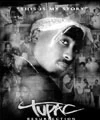
Academia took him seriously early on. UC Berkeley offered a course on his poetry as early as 1997, and in April 2003 Harvard hosted a symposium titled "All Eyez on Me: Tupac Shakur and the Search for the Modern Folk Hero." Rolling Stone lists him among the 100 greatest artists of all time. Many of today's rappers name him as their most important influence, and his face looks down from murals from Harlem to Rio de Janeiro.
Cities remember him too. In 2023 Oakland renamed a stretch of MacArthur Boulevard "Tupac Shakur Way," and in May 2026 Baltimore did the same for part of Greenmount Avenue near his teenage home. Mutulu Shakur was released in December 2022 after almost 37 years in prison because of cancer, and died in July 2023. Literature picks him up too: Angie Thomas named The Hate U Give after his THUG LIFE motto.
XVII
A Verdict After Thirty Years
For nearly three decades nobody was charged with the murder. Orlando Anderson, named early on as a suspect, denied any involvement and was killed in an unrelated shooting in 1998. Yafeu "Yaki Kadafi" Fula of the Outlawz, who had been riding in the car behind Tupac, was himself shot dead in New Jersey in November 1996.
The case only moved again because of Duane "Keffe D" Davis, Anderson's uncle and a former leader of the South Side Compton Crips. As early as 2008 he had described to investigators how the shooting came about, under an agreement that his statements would not be used against him. He later repeated the story in a TV documentary and in his 2019 book Compton Street Legend. In July 2023 police searched a house belonging to his wife in Henderson, Nevada, and on September 29, 2023, Davis was arrested after a murder indictment. He pleaded not guilty.
After several delays the trial opened in Las Vegas in August 2026. On August 31, 2026, the jury found Davis guilty of first-degree murder with a deadly weapon. Prosecutors did not claim he fired the shots himself but that he obtained the gun and set the attack in motion. Who pulled the trigger has never been established in court. Davis said he would appeal, and the verdict is not final; sentencing is scheduled for October 13, 2026 (as of October 2026). Full details are on the investigation page.
Sources
24 sources. Text updated: October 9, 2026.
- 1TIME (2023): Afeni Shakur and the Panther 21 trialtime.com
- 2The New Yorker (Oct. 30, 2023): review of Staci Robinson, “Tupac Shakur: The Authorized Biography”newyorker.com
- 3People: All About Tupac Shakur's Parents and Siblingspeople.com
- 4New York Amsterdam News (Sept. 13, 2016): Tupac Amaru Shakur: Native Harlemiteamsterdamnews.com
- 5Baltimore Magazine: Tupac Shakur spent his formative years in Baltimorebaltimoremagazine.com
- 6Marin Magazine: Tupac Shakur's life in Marinmarinmagazine.com
- 7New York Times (Nov. 30, 1994): Rap Artist Tupac Shakur Shot in Robberynytimes.com
- 8New York Times (Dec. 2, 1994): Wounded Rapper Gets Mixed Verdict in Sex Abuse Casenytimes.com
- 9New York Times (Feb. 8, 1995): Rapper Faces Prison Term for Sex Abusenytimes.com
- 10Billboard: Me Against the World anniversary (No. 1 debut)billboard.com
- 11NBC News (2023): Tupac Shakur's stepfather reflects on freedom after 35 years behind barsnbcnews.com
- 12Rolling Stone (2016): Afeni Shakur, Mother of Tupac Shakur and Activist, Dead at 69rollingstone.com
- 13Rock & Roll Hall of Fame: Tupac Shakur (inducted 2017)rockhall.com
- 14Hollywood Walk of Fame: Tupac Shakur to be honored with a posthumous starwalkoffame.com
- 15CBS News (2010): Tupac Shakur honored by Library of Congresscbsnews.com
- 16Installation International: Musion Eyeliner projects Tupac's ghost at Coachella (2012)installation-international.com
- 17The Assembly: Tupac Shakur and Lumberton (resting place of his ashes)theassemblync.com
- 18CBS News (Aug. 31, 2026): Guilty verdict in Tupac Shakur's 1996 murdercbsnews.com
- 19NPR (Sept. 1, 2026): Jury convicts a man of first-degree murder for the 1996 killing of Tupac Shakurnpr.org
- 20Al Jazeera (Sept. 1, 2026): Keffe D found guilty of killing Tupac Shakur (trial start, sentencing date)aljazeera.com
- 21Wikipedia (starting point): Tupac Shakuren.wikipedia.org
- 22Wikipedia (starting point): Murder of Tupac Shakuren.wikipedia.org
- 23Wikipedia (starting point): Panther 21en.wikipedia.org
- 24Old site: Tupac Shakur Biografie (thug-life.de, 2006/2010)thug-life.de
List of Figures
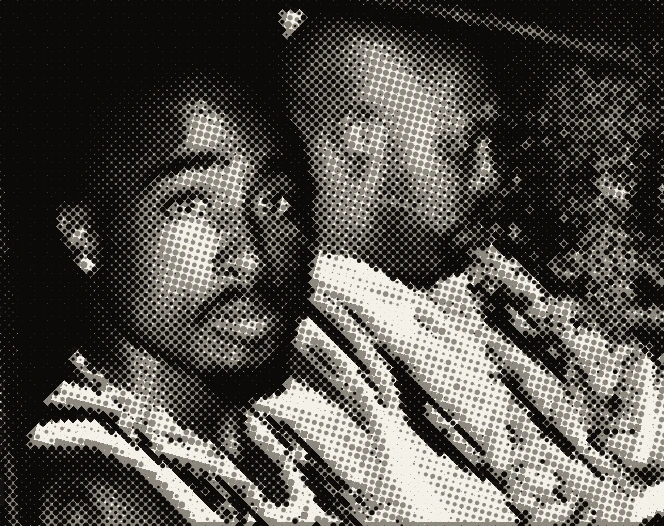
- 1Portrait, undated.2
- 2Childhood picture, undated. The people are not identified.12
- 3Geronimo Pratt, Tupac’s godfather. Undated.14
- 4Portrait, undated.16
- 5Portrait, undated.19
- 6Shock G of Digital Underground. Undated.20
- 7On stage, undated.20
- 82Pacalypse Now, 1991.23
- 9Brenda’s Got a Baby, single.23
- 10Juice, 1992.24
- 11Poetic Justice, 1993.24
- 12Above the Rim, 1994.24
- 13Strictly 4 My N.I.G.G.A.Z., 1993.25
- 14Thug Life: Volume 1, 1994.25
- 15In front of a graffiti wall, undated.30
- 16Dear Mama, single from 1995.32
- 17Me Against the World, 1995.33
- 18So Many Tears, single.33
- 19Temptations, single.33
- 20Suge Knight, head of Death Row Records. Undated.34
- 21At the microphone, undated.34
- 22All Eyez on Me, 1996.37
- 23California Love, single.37
- 24How Do U Want It, single.37
- 25In the car, undated.38
- 26The Rose That Grew from Concrete, 1999.40
- 27Tupac: Resurrection, 2003.43
- 28Snoop Dogg. Undated.43
- 29Portrait, undated.43
All pictures from the fan material of united-tupac.com and thuglove.de (2002 to 2012), set in grayscale for this edition, never enlarged. Covers and posters: works of their respective rights holders.
Index
- 1994 shooting30
- 1996 shooting38
- 2Pacalypse Now22
- Above the Rim24
- Afeni Shakur10
- All Eyez on Me36
- Billy Garland10
- Brenda's Got a Baby22
- California Love36
- Dear Mama32
- Digital Underground18
- How Do U Want It36
- I Get Around24
- investigation44
- Jada16
- Jada Pinkett16
- Juice24
- Keep Ya Head Up24
- Keisha Morris32
- Kidada Jones36
- Me Against the World32
- Mopreme Shakur14
- Mutulu Shakur14
- Names and aliases12
- Outlawz34
- poems40
- Poetic Justice24
- Sekyiwa14
- Shock G20
- Snoop Dogg42
- Strictly 4 My N.I.G.G.A.Z.24
- Suge Knight34
- The Don Killuminati: The 7 Day Theory40
Read on
- Lesane, Tupac, 2Pac, Makaveli: A Life in Names
- Concerts and Live Appearances: What Is Documented
- The timeline, 1968 to today
- The shootings of 1994 and 1996
About this edition
Text updated October 9, 2026.
United-Tupac.Com, the German Tupac Shakur site. A fan site since 2002.
Back to the cover