513 words · 2 min
Biggie & Tupac (2002)
Nick Broomfield's 2002 film on the Tupac and Biggie murders: highly watchable, with a prison encounter with Suge Knight, but speculative in its case.
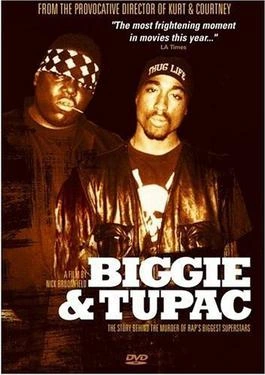
- Director and producer
- Nick Broomfield; co-producer Michele D’Acosta
- Cinematography
- Joan Churchill
- Premiere
- January 11, 2002, Sundance Film Festival
- US release
- September 20, 2002 (Roxie Releasing), later on DVD from Lions Gate
- Running time
- about 108 minutes
- Box office
- just under $95,000 in North America; a niche title that found its audience on DVD and television
Biggie & Tupac is British documentary maker Nick Broomfield’s attempt to solve the murders of Tupac Shakur (1996) and Christopher Wallace, The Notorious B.I.G. (1997). Broomfield was known for films such as Kurt & Courtney and Heidi Fleiss: Hollywood Madam, in which he wanders through the frame with headphones and a boom mic. He does the same here.
Facts and figures
The DVD came with a Broomfield commentary, photos, discographies of both rappers and information on the foundation run by Biggie’s mother. In Germany it carried an age-16 rating.
What it covers
Broomfield builds his film on the theory of former LAPD detective Russell Poole. In this version, Death Row Records boss Suge Knight had Tupac killed before he could leave the label, then had Biggie killed to make it all look like an East-West feud. Police officers moonlighting as Death Row security are said to have been involved, with the department covering it up.
Interviewees include Poole, Biggie’s mother Voletta Wallace, Tupac’s biological father Billy Garland, former Death Row bodyguard Kevin Hackie, and a jailed man who claims he delivered money for the Biggie hit. The standout scene takes place in a prison: Broomfield shows up without a real appointment, says he wants to record Knight’s “message to the kids”, then switches to the murders. Knight gives nothing away. According to Ebert, Broomfield’s regular camerawoman Joan Churchill refused to go in with him.
Reception
Roger Ebert called the film “compulsively watchable” while expressly declining to rule on whether Broomfield was right. Others were harsher: The New York Times described the case as largely speculative, and the Hartford Courant questioned the credibility of many witnesses. Kevin Hackie later told the Los Angeles Times that medication had caused memory lapses. A lawsuit by the Wallace family against the City of Los Angeles, which leaned on such claims, was dismissed in 2010.
Almost at the same time, in September 2002, Chuck Philips published an investigation in the Los Angeles Times that reached a very different conclusion: Southside Crips members shot Tupac in revenge for his beating of Orlando Anderson a few hours earlier.
Verdict
Biggie & Tupac is good cinema but not a reliable investigative record. Broomfield asks questions the police didn’t ask at the time and captures the fear around Death Row vividly. His central thesis, though, was never proven. In August 2026 a Las Vegas jury convicted Duane “Keffe D” Davis, a Southside Crips leader, of Tupac’s murder, an outcome far closer to the revenge theory than to Broomfield’s conspiracy. More on the case: The 1996 shooting. Poole’s theory in book form: Randall Sullivan’s Labyrinth.
Not to be confused with the music video DVD Welcome to the Hood, also listed as “Biggie & 2Pac”.
People in this text