833 words · 4 min
Biggie & Tupac (2002)
Nick Broomfield's 2002 film on the Tupac and Biggie murders: highly watchable, with a prison encounter with Suge Knight, but speculative in its case.
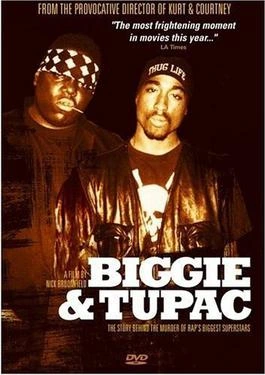
- Director and producer
- Nick Broomfield; co-producer Michele D’Acosta
- Cinematography
- Joan Churchill
- Working title
- L.A. Story (still listed that way in the Sundance festival catalog)
- Premiere
- January 11, 2002, Sundance Film Festival
- U.S. release
- September 20, 2002 (Roxie Releasing), in New York on September 27 according to the New York Times; later on DVD from Lions Gate
- Running time
- about 108 minutes
- Box office
- just under $95,000 in North America, a niche film that found its audience mainly on DVD and television
Biggie & Tupac is the film with which British documentary maker Nick Broomfield set out to solve the murders of Tupac Shakur (1996) and Christopher Wallace, aka The Notorious B.I.G. (1997). Broomfield was known for films such as Kurt & Courtney and Heidi Fleiss: Hollywood Madam, in which he himself stumbles through the frame with microphone and headphones. The same goes for this one.
Key Facts on the Film
The DVD contained a commentary by Broomfield, photos, discographies of both rappers and information about the foundation run by Biggie’s mother. In Germany it was rated 16 and over.
What It’s About
Broomfield’s through line is the theory of former LAPD detective Russell Poole, which Randall Sullivan’s book LAbyrinth also puts forward. According to it, Suge Knight, head of Death Row Records, had Tupac killed before he could leave the label and sue for outstanding royalties, and later Biggie too, to steer suspicion toward an East-West feud. Police officers who moonlighted as security for Death Row are said to have been involved, and the police allegedly covered it up. This was never proven.
The first half traces the youth of both rappers, with rare footage of early performances. Variety found it remarkable how middle-class Biggie’s background was compared with his gangster image. Then the film turns to the investigations. Those who speak include Poole, Biggie’s mother Voletta Wallace, Tupac’s biological father Billy Garland, former Death Row bodyguard Kevin Hackie and an incarcerated man named Mark Hyland, who claims to have been present at a meeting at which Biggie’s murder was arranged. The film also raises the question of why the FBI kept Biggie under surveillance up to the night of his death without intervening.
Climax in Prison
Death Row refused Broomfield an interview with Suge Knight, who during filming was in Mule Creek prison in Northern California for a parole violation. Broomfield went anyway, persuaded the warden to look for Knight, pretended he wanted to record a “message to the kids,” and then asked about the murders. Knight evades and talks about role models for young people. The Hartford Courant described how the nervous camera filmed the sky, a picnic table and Broomfield, everything except Knight.
Reception
Roger Ebert found the film “compulsively watchable” but explicitly left open whether Broomfield’s thesis was correct. Others were much more critical. Variety saw Broomfield’s cinema by now mainly as a one-man comedy showcase: his appearances as a clumsy outsider stumbling through offices and getting thrown out were entertaining, but upstaged the uneven investigative material. Only the last 45 minutes or so really got somewhere, with “disturbing, if unprovable” accusations.
The New York Times wrote in October 2002 that the film gathered circumstantial evidence and speculation without presenting counterarguments or questioning its sources’ credibility. The Hartford Courant called the interviewees “not the most credible bunch” and pointed to Hyland, who at the time of the interview was awaiting trial on 37 counts of impersonating a lawyer.
The doubts grew later. In June 2005, on the eve of his testimony in the Wallace family’s civil suit against the City of Los Angeles, Kevin Hackie told the Los Angeles Times that he suffered from severe memory lapses due to medication. A few weeks earlier, another paid informant on whom the police theory relied had admitted under oath that his information was “all hearsay.” The Wallace family’s lawsuit was dropped without a verdict in April 2010.
Almost at the same time as the film, in September 2002, an investigation by Chuck Philips appeared in the Los Angeles Times. It reached a completely different conclusion: members of the Southside Crips had shot Tupac out of revenge because he had beaten up Orlando Anderson hours earlier.
Assessment
Biggie & Tupac is good cinema, but not a reliable investigative report. Broomfield asks questions the police did not ask at the time and shows impressively how much fear surrounded Death Row. His main thesis, however, remained unproven. On August 31, 2026, a jury in Las Vegas found Duane “Keffe D” Davis, a leader of the Southside Compton Crips, guilty of Tupac’s murder; the verdict is not final, and Davis has announced an appeal. This outcome is closer to the revenge thesis than to Broomfield’s conspiracy. More on the investigations: Shooting 1996. Anyone who wants to read Poole’s theory in book form: Labyrinth by Randall Sullivan.
Not to be confused with the music video DVD Welcome to the Hood, which is also listed under the title “Biggie & 2Pac.”
People in this text