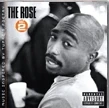
Background · The Rose, Vol. 2
Where the first volume still sounded like a poetry reading, drum machines were running five years later. On The Rose, Vol. 2, Amaru Entertainment presented a sequel that set itself clearly apart from its predecessor The Rose That Grew from Concrete: instead of merely reciting the poems, the contributors built their own hip-hop tracks around Tupac's verses. Spoken recitation remains in only a few places.
Rappers Instead of Actors: A New Concept for Younger Listeners
As with the first volume, the texts came from Tupac's poetry collection, which his early mentor Leila Steinberg had preserved and which was published as a book in 1999. This time, however, the project deliberately reached out to younger listeners. Instead of poets and actors, the focus was on rappers who were current in 2005, along with several companions. The album was released through Koch Records, which distributed several Tupac releases in those years.
From Talib Kweli to Memphis Bleek
Talib Kweli opens the conceptually strongest section of the album with Fallen Star (produced by 88-Keys). Ludacris turns In the Depths of Solitude into a reflective track, while Bone Thugs-n-Harmony sing and rap The Power of a Smile. Lyfe Jennings wrote and produced Movin' On himself. On Life Through My Eyes with Memphis Bleek, Tupac can finally be heard in his own voice as well.
Companions, Outlawz, and Voices from Harlem
Several contributions build a bridge to Tupac's biography. Shock G, who had brought him into Digital Underground in 1990, produced and sang And 2morrow. The Outlawz set When Ure Heart Turns Cold to music, which had still been read by Sonia Sanchez on the first volume. Rapper Yo-Yo, a close friend of Tupac's, takes on Only 4 the Righteous. Dead Prez, already featured on Vol. 1, close the circle with If I Fail.
At the end stand children: the Impact Kids, a youth theater group from Harlem, perform When Ure Hero Falls, and two girls from the Pacskids read the closing piece, Poetry.
Little Echo in the Charts, Revealing for Collectors
The album received little attention in the press or on the charts; reliable chart data or certifications could not be found for this page. Older tracklists circulate with slightly misspelled names (such as "Talib Kwali"); the corrected spellings are used here. For collectors, the release is nevertheless interesting: it shows how a new rap generation read Tupac's early poetry-more cohesive compared with Vol. 1, but also more conventional.