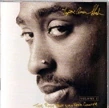
Background · The Rose That Grew from Concrete
Before Tupac rapped, he wrote poems. In November 2000, a year after the publication of his poetry collection The Rose That Grew from Concrete, an album followed under the same title: actors, poets, rappers, and musicians read and set his verses to music. It is the most unusual work in his discography-and the only one on which Tupac himself is barely heard.
How the Verses from Marin County Made It into the Studio
The poems were written around 1989 to 1991, when Tupac was living in Marin County as a teenager. Leila Steinberg, a teacher and poetry organizer who mentored him at the time and briefly managed him, had collected and preserved the pages. In 1999, they were published as a book, complete with facsimiles of the handwritten pages (more on this in the books section).
For the album, Afeni Shakur and Steinberg took charge alongside former Black Panther activist and filmmaker Jamal Joseph. At the center are not vocal tracks, but his written words. Only the short Tupac Interlude at the beginning and a few scattered recordings let Tupac himself be heard.
Poets, Companions, and Rappers Lend Tupac Their Voices
The lineup reaches far beyond hip-hop. Mos Def performs Can U C the Pride in the Panther in two versions, while Dead Prez turn U R Ripping Us Apart!!! into a rap track. Poets Sonia Sanchez and Nikki Giovanni read When Ure Heart Turns Cold and the title poem. Actor Danny Glover recites A River That Flows Forever together with Afeni Shakur, accompanied by members of the cast of The Lion King.
Further contributions come from Q-Tip (The Fear in the Heart of a Man), Quincy Jones and Mac Mall (Starry Night, produced by QDIII), as well as Russell Simmons, Rev Run, Jasmine Guy, and Malcolm-Jamal Warner. On In the Event of My Demise, the Outlawz join Geronimo Ji-Jaga Pratt, the former Black Panther leader and Tupac's godfather. K-Ci sings Wife 4 Life with 4th Avenue Jones.
No Chart Success, but a Glimpse Behind the Thug Life Image
Commercially, the album remained a marginal phenomenon: No. 89 on the Billboard 200, and roughly 263,000 copies sold in the US by 2011 according to Nielsen figures. For many fans, it remains an important document nonetheless. It reveals a side that is often lost in the debate surrounding "Thug Life": the young poet writing about love, God, racism, and vulnerability.
The wide range of voices makes the album uneven; some contributions feel more like spoken readings than songs. Yet that is precisely where its appeal lies: it shows just how many different people draw upon Tupac's words. In 2005, a sequel followed with The Rose, Vol. 2, featuring a significantly stronger rap presence.