United-Tupac.Com · Biography
1971 to 1996
A life in seventeen chapters

United-Tupac.Com
Tupac
Amaru
Shakur
June 16, 1971 to September 13, 1996
A biography in seventeen chapters.
With figures, a year overview and sources.
United-Tupac.Com
Fan site since 2002 · Updated October 22, 2026
Contents
“Did u hear about the rose that grew from a crack in the concrete?”
In May 1971, a trial in New York in which a pregnant woman with no legal training had defended herself for months ended in her acquittal. Five weeks after the acquittal, her son was born. Tupac Amaru Shakur lived for another 25 years, and in that time he was a drama student, a dancer, a rapper, an actor, a prison inmate and one of the best-selling musicians of his generation. He wrote about poverty, police violence and mothers raising their children alone, while living out the very image his critics warned against.
This biography describes the political family he was born into and the fractures of his final years. It reaches beyond 1996: to the releases that followed his death and to the verdict of 2026.
Overview
The Years
50 years mentioned in this biography, from 1947 to 2026. Each leads to the chapter where it first appears.
- 1947I · A Mother Who Defended Herself
- 1958I · A Mother Who Defended Herself
- 1968I · A Mother Who Defended Herself
- 1969I · A Mother Who Defended Herself
- 1970I · A Mother Who Defended Herself
- 1971I · A Mother Who Defended Herself
- 1973III · Childhood Between Harlem and the Most Wanted List
- 1975III · Childhood Between Harlem and the Most Wanted List
- 1979III · Childhood Between Harlem and the Most Wanted List
- 1981III · Childhood Between Harlem and the Most Wanted List
- 1982III · Childhood Between Harlem and the Most Wanted List
- 1983III · Childhood Between Harlem and the Most Wanted List
- 1984III · Childhood Between Harlem and the Most Wanted List
- 1985IV · Baltimore: Theater, Ballet and First Rhymes
- 1986III · Childhood Between Harlem and the Most Wanted List
- 1987IV · Baltimore: Theater, Ballet and First Rhymes
- 1988III · Childhood Between Harlem and the Most Wanted List
- 1989V · Marin City
- 1990VI · From Roadie to 2Pac
- 1991V · Marin City
- 1992VII · A Debut Becomes a Political Issue
- 1993VII · A Debut Becomes a Political Issue
- 1994VIII · Three Film Roles in Three Years
- 1995VII · A Debut Becomes a Political Issue
- 1996II · A Name to Hide Behind
- 1997VII · A Debut Becomes a Political Issue
- 1998XVII · A Verdict After Thirty Years
- 1999V · Marin City
- 2001XV · The Posthumous Albums
- 2002XV · The Posthumous Albums
- 2003XV · The Posthumous Albums
- 2004XV · The Posthumous Albums
- 2005XV · The Posthumous Albums
- 2006IV · Baltimore: Theater, Ballet and First Rhymes
- 2007V · Marin City
- 2008X · Shots in the Lobby at Times Square
- 2009X · Shots in the Lobby at Times Square
- 2010XVI · Honors and Legacy
- 2011X · Shots in the Lobby at Times Square
- 2012X · Shots in the Lobby at Times Square
- 2014XIII · Two Albums at Once
- 2015XV · The Posthumous Albums
- 2016XV · The Posthumous Albums
- 2017IV · Baltimore: Theater, Ballet and First Rhymes
- 2018XVI · Honors and Legacy
- 2019XVII · A Verdict After Thirty Years
- 2022III · Childhood Between Harlem and the Most Wanted List
- 2023IV · Baltimore: Theater, Ballet and First Rhymes
- 2024XVII · A Verdict After Thirty Years
- 2026XVI · Honors and Legacy
I
A Mother Who Defended Herself
The story begins with Afeni Shakur. She was born Alice Faye Williams on January 10, 1947, in Lumberton, North Carolina, at home, with a midwife in attendance. On her way to school, white men shouted slurs at her from passing cars. In January 1958, when more than 500 armed Lumbee broke up a Ku Klux Klan rally in nearby Maxton, she was eleven. "That was my first taste of resistance," she said decades later. Soon afterwards her mother, Rosa Belle, left her violent husband and moved with her two daughters to the Bronx.
In New York, Alice passed the entrance exam for the High School of Performing Arts but dropped out and joined a girl gang. She found her footing in the Yoruba tradition; her teacher suggested the name Afeni, which means "dear one" and "lover of the people." On the corner of 125th Street and Seventh Avenue she heard Bobby Seale speak, one of the founders of the Black Panther Party, and in 1968 she joined the party in Harlem. In November 1968 she married Lumumba Shakur, the son of the respected activist Saladin Shakur. The name Shakur carried so much weight in the movement that others adopted it as a sign of solidarity.

On April 2, 1969, before dawn, police officers came to the couple's apartment on West 117th Street and lured them to the door by shouting "Fire!" Twenty-one Panthers were charged with plotting to bomb a railroad line, the Bronx Botanical Garden and five department stores. Among their supposed comrades were undercover officers, including Ralph White, whom Afeni had distrusted from the start. The "Panther 21" case became the longest and most expensive criminal trial in New York State history up to that point.
At the end of January 1970, Afeni was released on $100,000 bail, raised by supporters from the labor movement and church congregations. Her fellow prisoners had chosen her because she was a good speaker. Against her husband's advice, she decided to represent herself in court. In the fall of 1970 she began a brief affair with Billy Garland, a Panther from Jersey City who drove her to court in the mornings in the party newspaper's delivery van. Lumumba, who was in jail, learned of her relationships with other men and pronounced a divorce under Islamic law. In November 1970, Afeni realized she was pregnant.
Her cross-examination made clear that White had never seen her commit a crime. The reporter Murray Kempton wrote that within twenty minutes she had turned the prosecution's witness into her own. When two co-defendants fled in February 1971, Judge John M. Murtagh revoked the bail of Afeni and Joan Bird. Six months pregnant, Afeni had to go back to the Women's House of Detention, where up to 600 women shared 400 beds. According to Robinson, the court refused her request for one egg and one glass of milk a day for the unborn child, and the cooks secretly brought her better food; TIME magazine, by contrast, writes that the court granted her a glass of milk and a boiled egg a day.
In her closing argument she asked the jurors to judge her the way they themselves would want to be judged. On May 3, Murtagh released her until the verdict. On May 13, 1971, the jury acquitted all 13 remaining defendants on all 156 counts. The deliberations had taken less than an hour and a half. At the celebration afterwards, a juror asked her where she had learned to carry herself like that. "Fear, Mr. Giles, plain fear," she replied.
II
A Name to Hide Behind
A good month later, on June 16, 1971, Afeni's son was born in East Harlem. Afeni was sitting at her sister Jean's place in the Bronx, reading the paper, when labor began. Frankie Zipp, a supporter who had followed the entire trial from the gallery in a suit, drove her in his new white Cadillac to New York Flower-Fifth Avenue Hospital. The New York Times claim in 1996 that he was born in the Bronx is wrong. Afeni feared the baby might be switched or taken from her and asked Jean to take a close look at the newborn. She had hardly dared to hope for a healthy child: by her own account, she had miscarried four or five times before Tupac. He wanted to be in this world, she said later.
Afeni registered the name Parish Lesane Crooks on the birth certificate; the frequently cited order "Lesane Parish Crooks" is wrong. The first name Parish was chosen by her friend and former cellmate Carol "Crooksie" Crooks; Lesane was her sister's surname at the time. The child was not to be immediately recognizable as a "Panther baby" whom the authorities might flag as a threat. "Tupac was always his name," Afeni said later. In her mind, she said, he had been a soldier in exile from the very beginning.
About a year later the boy was given the name the world knows him by: Tupac Amaru Shakur, after the Peruvian rebel Túpac Amaru II, executed by the Spanish colonial rulers in 1781. Afeni explained that she had deliberately chosen not to name him after an African, but after an Indigenous person from another continent. He was to know that he was part of a world culture and not just a neighborhood. Where his other names come from is explained on the page Names and Aliases.

The baby spent his first days in Jean's apartment on Woodycrest Avenue near Yankee Stadium, among five cousins who argued over who got to hold him. Then a wealthy supporter offered mother and child her empty apartment on Bank Street in Greenwich Village, rent free. Afeni found work as a paralegal at Bronx Legal Services and was allowed to bring her son along every day.
Who the father was remained an open question. At the Armory on 168th Street, during a speech by Louis Farrakhan, Afeni placed the baby, just a few weeks old, in Billy Garland's arms. Next to them stood Karen Lee, a friend of Garland's wife, who twenty years later would become Tupac's publicist. Afeni said: "I think you want to meet your son." But Kenneth "Legs" Saunders, a lieutenant of the drug kingpin Nicky Barnes with whom Afeni had been involved after Garland, also believed he was the father. "That's mine," he said at the crib after his release from prison. Garland lost contact with Afeni when Tupac was about five and did not see his son for 15 of his 25 years. In 1996 Tupac told Vibe magazine that all his life he had thought his father was dead. Only a DNA test after Tupac's death confirmed Garland's paternity, at 99.97 percent. When he was a little over a year old, Tupac and his mother moved back in with the cousins in the Bronx.
III
Childhood Between Harlem and the Most Wanted List
At Aunt Jean's, Tupac was the youngest and the favorite, and his older cousins made a game of teasing him. His mother took him along to political meetings in apartments, in Queens for instance. "We always thought we were going to a party," his cousin Kenny recalled. "It was really a rally." While the adults conferred upstairs, Kenny said, the revolutionaries' children played together. At the time, Afeni coordinated a nationwide working group that aimed to bring the FBI's secret programs against Black civil rights activists before the courts and to free imprisoned Panthers. Among its most urgent cases was Geronimo Pratt. The former Panther was serving a sentence of 25 years to life in San Quentin, eight of them in solitary confinement, convicted of a killing in Santa Monica that he denied.
In the 1970s the family moved often, between apartments in Harlem and the Bronx; at times they had no home of their own at all. Assata Shakur is considered Tupac's godmother, Geronimo Pratt and Jamal Joseph, who had sat with Afeni on the Panther 21 defendants' bench, his godfathers. In 1975 Afeni married the activist Mutulu Shakur, and that same year Tupac's half-sister Sekyiwa was born. Mutulu had first learned acupuncture without formal training; in 1979 he was licensed in California. At the Lincoln Detox Center, part of Lincoln Hospital in the Bronx that Panthers and Young Lords had taken over, he treated drug addicts with needles and combined the treatment with political education. His son Maurice Harding, later known as the rapper Mopreme Shakur, became Tupac's stepbrother.
Afeni raised her son strictly and politically. "I trained him," she said later. "His punishment was reading the New York Times." When the civil rights activist and minister Herbert Daughtry in Brooklyn asked the boy what he wanted to be when he grew up, he answered: "A revolutionary." Daughtry told the story in 1996 at a memorial service for Tupac and added that the boy probably never knew how one becomes that.
In 1979, supporters freed Assata Shakur from a New Jersey prison where she was serving a life sentence. Five years later she turned up in Cuba, where she was granted asylum. Afeni and Mutulu separated in 1982, and Mutulu became a wanted man. He was considered the planner of the armed robbery of a Brink's armored truck on October 20, 1981, in Nanuet, New York, in which a guard and two police officers were killed. In 1982 the FBI put him on its Ten Most Wanted Fugitives list. He was not caught until February 1986, in Los Angeles.


In May 1988, after a six-month trial, a Manhattan jury found him guilty on all eight counts. The prosecution had called 100 witnesses; the most important was a former member of the group who had himself confessed to a killing. The verdict also covered a 1981 armored car robbery in the Bronx in which a guard died, and Assata Shakur's escape, which Mutulu's defense attorney Chokwe Lumumba called "the liberation of Assata Shakur." The sentence was 60 years in prison. In 1983, in the first trial over the robbery, Jamal Joseph had already been acquitted of murder and robbery but convicted as an accessory after the fact.

These years produced what the auction house called the earliest known piece of writing by Tupac. At eleven, he wrote and illustrated a booklet of haiku and poems and sent it to four imprisoned Panthers from his mother's circle of friends, among them Jamal Joseph. One drawing shows him asleep, pen in hand, dreaming of the prisoners' release. He signed it "Tupac Shakur, Future Freedom Fighter." By his own recollection, Joseph kept the booklet for about a year in his cell at Leavenworth until guards searched the cells after a stabbing, and then sent it to his wife. In 2022, Sotheby's offered it at an estimate of $200,000 to $300,000.
Afeni worked at Bronx Legal Services for about ten years. But she had gone back to cocaine shortly after Tupac's birth, and in the early 1980s she slid deeper into addiction. The later politician Charles Barron, whom mother and son often visited in Bedford-Stuyvesant when Tupac was about 13 or 14, remembered a sensitive, rather shy boy who wrote him a poem called "Stormy Weather." Mutulu, Barron said, was close to the boy and had a great deal of influence on him.
At twelve, Tupac joined the 127th Street Repertory Ensemble in Harlem, a theater company that Ernie McClintock had founded in 1973 and that existed until 1986. McClintock worked with a method he called "jazz acting": actors were to develop their characters out of their own lives. In 1984 Tupac appeared on the stage of the Apollo Theater on 125th Street in A Raisin in the Sun, his first major role with the company. Two years later he took a scene from it to Baltimore as his audition piece.
IV
Baltimore: Theater, Ballet and First Rhymes
Still in 1984, Afeni moved with Tupac and Sekyiwa to Baltimore, looking for work and a better life. The family lived on the ground floor of a brick row house on Greenmount Avenue in the Pen Lucy neighborhood. Tupac was 13, wore hand-me-down pants so wide they had to be stapled, and slept in the small room; his mother and sister slept in the converted dining room. The apartment was clean, a friend recalled, but always dark and nearly empty. Tupac was in eighth grade at Roland Park Middle School. In Mrs. Gee's class photo he stands, slight, in the second row; while other children grin broadly at the camera, his mouth is open, as if he were talking to the photographer at that very moment.
In the front row sits Dana Smith, a beatboxer everyone called "Mouse." In September 1984, on the crowded No. 8 bus, Tupac took the last free seat, next to him. Smith just wanted to get home quickly to hear the "Rap Attack" radio show at four o'clock, and asked the new kid if he could rap. Tupac recited a rhyme that, as Smith later realized, was by Kurtis Blow and that nobody in Baltimore knew yet. Smith's family and friends mocked the poor boy from New York and asked why he bothered with someone like that. Smith stuck with him.
The two wrote rhymes every afternoon, inside a plastic dome on the playground behind Tupac's house, where the acoustics were so good, or in Smith's basement on 41st Street. Basketball and table tennis at the recreation center on Old York Road did not interest Tupac; at sports, in Smith's words, he was bad at everything. They listened to Eric B. & Rakim and Run-DMC, but also to Kate Bush, Sting, Steve Winwood and Dire Straits. In the title track of Brothers in Arms they liked the story of a man staring death in the face and holding on to the loyalty of his comrades. Their own pieces were called "Babies Havin' Babies" or "Genocide Rap." Tupac taught the others about social issues, Smith said, and in hip-hop they could finally say what they thought. According to the New York Times, Tupac wrote his first rap, about gun control, after a friend was shot and wounded while playing with guns.

In November 1985, the Enoch Pratt Free Library invited young people under 18 to a contest with a flyer ("Calling All Rappers!"). The lyrics had to be about the library, submitted in writing in advance and free of profanity. Tupac wrote the "Library Rap" in black ballpoint on lined paper, and as the East-Side Crew he and Smith made it to the final at the library branch on Pennsylvania Avenue. Their performance opened with "Yo' Enoch Pratt, bust this!" and urged kids to get a library card, learn to read and stay in school. The organizer, Deborah Taylor, drove the two of them there because they had no car, and called them very polite boys. "When Tupac performed, you couldn't take your eyes off him," she said. According to Baltimore Magazine, they won. The handwritten sheet went into the library's special collections, alongside works by H. L. Mencken and Edgar Allan Poe. The friends performed wherever they could: in front of the dealers on Old York Road, as the opening act for Mantronix at the Cherry Hill recreation center, even at funerals in the neighborhood.
After a year at Paul Laurence Dunbar High School, Tupac auditioned in 1986 for the Baltimore School for the Arts. For weeks he had rehearsed a scene from A Raisin in the Sun with Smith, the play he had performed in New York. Theater director Donald Hicken immediately saw an unusually charismatic boy; from the first day, everyone sensed that he was real. He also noticed how closely the student paid attention to injustice: Tupac lived in a rough neighborhood, Hicken said, and saw the world through the eyes of a revolutionary.

"I loved my classes," Tupac later said of his two years at the school. He performed Shakespeare, studied Ibsen and Sam Shepard, argued about King Lear and Hamlet, and constantly wrote poems in a notebook. He took ballet classes; according to the author Randall Sullivan, he danced the Mouse King in The Nutcracker. For a movement exercise he chose Don McLean's song "Vincent" about van Gogh, because it was about a misunderstood artist. He was not a particularly good student, in Hicken's words, but he was hungry to learn; he spent his lunch breaks reading in the library. Acting teacher Richard Pilcher saw a future Denzel Washington in him. Tupac told a friend he wanted to become a Shakespearean actor, because for that you had to be the best. Looking back, he said that without theater, ballet and the new music he would have become a completely different person.
This is where he met Jada Pinkett, a dance and theater student from Baltimore. Both were in their second year of high school, and the connection was there right away, she said later. The two had more in common than anyone at the arts school could tell by looking at them: Jada's mother was addicted to heroin, and by her own account Jada was dealing drugs herself at the time. Between them it was about survival, she said in 2017, not romance. A single attempt at a kiss on the back porch of her house settled that; it was disgusting for both of them. In their junior year the two filmed themselves lip-syncing and dancing to "Parents Just Don't Understand" by DJ Jazzy Jeff & The Fresh Prince; in 2023 Jada called the clip the last memory of a time when they were simply kids together. The friendship lasted for years, and he wrote poems for her such as Jada. When he died, the two were not speaking after an argument.
In an alley next to the school, the friends faced off in rap battles; on the mic he called himself MC New York. The words just rolled off his tongue, his classmate Linda-Denise Fisher-Harrell remembered. Another, Becky Mossing, described a magnetism that defied all logic; he DJed at parties in her parents' basement. He wrote love letters to his classmate Mary Baldrige ("I look at your picture and lose myself in your face," December 1987) and went with her to meetings of the Young Communist League, of which her parents were members. Afeni pushed him to give up the meetings and focus on his grades; in February 1988 he wrote to Baldrige that he would give his mother "the coldest shoulder." With Smith, Darrin Keith Bastfield and Gerard Young he formed the group Born Busy, whose eight cassette recordings are considered his first songs; they were about friendship and loyalty.
He told hardly anyone what was going on at home. The bills were hard to pay, Afeni's crack addiction was getting worse, and Tupac often slept at friends' places, for a while in the apartment of the young painter John Cole in Reservoir Hill. In the evenings and on weekends he bussed tables and washed dishes at the Fish Market restaurant at the harbor. On the way home, he and his friends sometimes climbed onto the empty outdoor stage at Hopkins Plaza and rehearsed their raps in the middle of the night.
Toward the end of the 1988 school year, he told Hicken in tears that the family was moving to California. Hicken offered to find a host family for his final year. Tupac declined: he had to be there for his sister. His father had not been around, Hicken said; he was the man of the house. In the summer of 1988 the family left Baltimore. In 2006 Jada Pinkett Smith donated one million dollars to the school; according to a report in the Chronicle of Philanthropy, the theater was to be dedicated to Tupac.
V
Marin City
In 1988, Afeni sent the children to Marin City near San Francisco, where a comrade from her Panther days was to look after them. She herself stayed in Baltimore until she had saved enough for her own ticket. Marin City was a poor settlement of around 800 people, a few minutes' drive north of the Golden Gate Bridge; many residents called it "the jungle." The family lived in Building 89, one of the barracks-like row houses on the hillside. In Marin City, Tupac had to take on responsibility early, for himself and for his sister.
Tupac attended Tamalpais High School in neighboring Mill Valley, a school with mostly white students. His teacher Barbara Owens sensed that he was having a hard time; what was really weighing on him she understood only much later. She had the class read Shakespeare's Othello aloud in parts and gave him the title role. When he read the scene in which Othello wrestles with whether to kill Desdemona, she stopped the lesson: the class would never hear this text read so well again. His grades reportedly did not slip despite everything. In Marin City he rapped with Darren Page in the group One Nation Emcees, wearing his hair in a flattop with a patch bleached rust red, and called himself MC New York, as he had in Baltimore. A neighbor said after Tupac's death that everyone had known he would make it: he was always writing rhymes.
Through music and school he found the woman who first gave his career a deliberate push. Leila Steinberg, a dancer, concert promoter and teacher from Rohnert Park north of the Bay, led writing circles for young poets, rappers and actors. As she remembers it, she met him in 1988, when the Tamalpais High student openly criticized her plan for a school event; other sources give 1989 and a poetry class in Oakland. "It was my group until Tupac came," she said later. He himself explained their closeness this way: she was older, she was white, and she got to read his poems. For a time he lived with her and her family in Rohnert Park and slept on the sofa. She kept many of the poems he wrote between the ages of 17 and 19; in 1999 they were published as The Rose That Grew from Concrete.
Steinberg became his first manager and looked after his group Strictly Dope with the rapper Ray Luv from Santa Rosa and DJ Dize. Their tracks mixed political material such as Panther Power with playful rhymes such as The Case of the Misplaced Mic. Steinberg drove the young men back and forth between the North Bay and studios in the East Bay, even when she was several months pregnant. She demanded honesty from them, Ray Luv said. At the Starlight Sound studio in Richmond she introduced Tupac to the musicians of Digital Underground and to Atron Gregory, the group's manager. The recordings from those years became the 2007 album Beginnings: The Lost Tapes 1988-1991.


At home, by contrast, things were going badly. Afeni followed them out, and her crack addiction got worse in Marin City, so close to one of the drug's distribution hubs in Northern California. Tupac moved out, stayed for a time with friends in an empty apartment and sold crack so he could afford food. "He wasn't a gangster when he lived here with us," Darren Page said after Tupac's death. Others in the neighborhood remembered a boy who was changing: he set his mother's politics aside, carried a nine-millimeter pistol in his waistband and talked harder than ever before. "He was an actor," said a Marin City resident who called himself Freaky Freddie. According to biographer Jeff Pearlman, a 13-year-old once outrapped him in a street cipher. Afterwards, Tupac is said to have studied a 21-year-old dealer named Bobby Burton closely and written the song Dayz of a Criminal, an early trace of what he would later call THUG LIFE.

He could no longer bear to watch his mother's decline; in 1989 he went to Oakland. At some point he simply stopped going to school, because, as the author Michael Eric Dyson writes, it no longer fit his view of the world. He did not graduate there and later earned his GED. That same year, the 18-year-old began writing an autobiography, complete with table of contents and introduction. Atron Gregory, later his manager, said of these years that the Bay Area was where Tupac wrote; what he saw and lived through there is in his music.
He was impatient. Staci Robinson, who had met him at 17 through school friends and decades later wrote his authorized biography, tells of a phone call to her and her roommates in Los Angeles: his career was not taking off fast enough, he had to come to L.A. A few days later he was standing at the door with a backpack and a blue notebook. He slept on the sofa, wrote during the day while the others were at school or at work, and in the evenings at dinner he read out what he had written. Then Leila Steinberg found him a place to stay.
When Tupac died in 1996, the news reached Marin City shortly before five in the afternoon. A woman slowed her car near Building 89, rolled down the window and screamed: "Tupac's dead."
VI
From Roadie to 2Pac
At first the record labels did not want the young rapper. Atron Gregory, however, believed in him. Tupac rapped for Shock G, and in 1990 Gregory brought him into Digital Underground as a roadie and dancer, a playful funk rap group from Oakland built around Shock G. Shock G, whose real name was Gregory Jacobs, was a rather shy tinkerer on keyboards, drums and samples who preferred to perform in disguise. As Humpty Hump, with a plastic nose and Groucho Marx glasses, he scored a hit in 1990 with The Humpty Dance that reached No. 11 on the Billboard Hot 100 and earned Digital Underground the only Grammy nomination of their career. Even so, he often struggled with the spotlight; he did not want to be that guy, his co-founder Jimi Dright said later. His partner on the mic was Money-B, who later handed Tupac the script for Juice.

In 1990, Tupac went on his first tour with the group. He hauled cases and danced on stage. Afeni heard from other people that her son had appeared on The Arsenio Hall Show in 1990. "I didn't know what was happening to my son," she said later.
He did not stay in the background for long. In January 1991 the single Same Song came out, featuring the rap debut of a certain 2Pac. In it, Shock G hands him the mic with the words "2Pac, go 'head and rock this." In the video, Tupac plays an African king. The song was used in the film Nothing But Trouble, in which Digital Underground made a cameo: Tupac's first film scene. The EP This Is an EP Release, which included the song, had already gone gold by March 1991. Later in 1991 he could also be heard on the group's album Sons of the P. Through the group he also met the Queens rapper Randy "Stretch" Walker, with whom he often performed over the following years.

A deal of his own was still some way off. Gregory sent his demo to labels in New York and Los Angeles, but the rejections piled up. Even Jeff Fenster at Charisma Records, the only one who believed in Tupac, could not convince his bosses. Same Song helped: Tupac landed at Interscope Records, a young label in Los Angeles that released his debut together with TNT Recordings and later also distributed his albums on Death Row. Interscope executive Tom Whalley said later that he had never worked with anyone who wrote so many good songs so quickly.
His first album was made with the Underground Railroad, a loose collective from the Digital Underground circle, at the Starlight Sound studio in Richmond near Oakland; Shock G was a co-producer. At the same time, Tupac stood in front of a film camera properly for the first time. In March 1991, shooting began in Harlem on Juice, the subject of chapter eight.
VII
A Debut Becomes a Political Issue
In October 1991, shortly before his first album, two police officers stopped him in downtown Oakland for jaywalking. By his account, they demanded his ID and hassled him about his name. When he cursed at them, he ended up in a chokehold, close to passing out, in handcuffs. "I got arrested for resisting arrest," he told the journalist Davey D. "Yeah, you heard right." He sued the city for ten million dollars. If he won, he announced, the Oakland police would be buying a home for boys, a house for him, one for his family and a center against police brutality. In the end he received a little over $40,000 in a settlement. A young rapper suing the police and getting paid was rare at the time. Oakland nevertheless remained home for him: if he belonged anywhere, he said later in Los Angeles, it was there.
On November 12, 1991, 2Pacalypse Now was released, recorded over more than a year at Starlight Sound in Richmond, produced mainly by the Underground Railroad, with contributions from Raw Fusion and the New York duo Live Squad. It is an album about racism, police violence, poverty and teenage pregnancy. The first single was Trapped, which compares the inner city to a prison that a young Black man cannot escape. In Soulja's Story the narrator shoots a police officer after a traffic stop, a line that soon occupied politicians.

Brenda's Got a Baby, with the singer Dave Hollister on the hook, tells the story of a twelve-year-old girl who puts her newborn in the trash. Tupac had found the case in the newspaper: the New York Daily News had reported, under the headline "Cries in the Dark," on a twelve-year-old who had dropped her baby down a trash chute. The child survived. Decades later, biographer Jeff Pearlman tracked down the boy, Davonn Hodge, who for 32 years had known nothing about his origins, and brought him together with his mother. No male rapper was talking about the problems girls faced back then, Tupac said, about abuse in the family, about poverty and drugs. The song reached No. 3 on the rap charts. The album was not a hit: No. 64 on the Billboard chart, gold only in April 1995. It remained the weakest-selling album of his career.
A criminal case made it famous. On April 11, 1992, Texas state trooper Bill Davidson, 43, pulled over a stolen truck. The driver, 19-year-old Ronald Ray Howard from Houston's South Park neighborhood, who had left school after seventh grade, shot him in the neck with a nine-millimeter pistol. Davidson died of his wounds. Howard was said to have been listening to 2Pacalypse Now before and during the shooting, and his defense attorney, Allen Tanner, blamed the music in part: gangsta rap and life in South Park had led the young man into crime almost inevitably. At the trial, which had been moved from Jackson County to Austin, he played Trapped for the jurors. "That's not a defense," prosecutor Bobby Bell countered, "at best an explanation." On June 8, 1993, after 26 minutes of deliberation, the jury found Howard guilty, and he was sentenced to death.

Davidson's widow, Linda, and her two children sued Tupac, Interscope and Time Warner. The lyrics incited young people, she said, and the record should be pulled from stores. The Texas police association declared that the music said it was okay to kill a police officer. A lawyer for the label countered that music does not make anyone shoot people. The lawsuit failed in 1997 before a federal court in Texas, which held that the album was protected by the First Amendment.
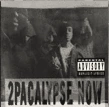
On September 22, 1992, U.S. Vice President Dan Quayle met Davidson's daughter Kimberly in Houston. Afterwards he spoke of another irresponsible corporate act and called on Interscope, half of which was owned at the time by the Time Warner conglomerate, to pull the album from stores: "There is absolutely no reason for a record like this to be published by a responsible corporation." The record, he said, had no place in society. Quayle compared it to Ice-T's Cop Killer, which Time Warner had withdrawn that summer. Interscope refused, and the album was never banned. On his next album he took aim at Quayle once more in Pac's Theme and Peep Game.
For the family, these months also brought good news. Afeni moved back to the East Coast, went to Narcotics Anonymous meetings and was off crack by the end of 1991. Mother and son reconciled and remained close until his death.
VIII
Three Film Roles in Three Years
At the same time his film career began, almost by accident. In early 1991, Ernest Dickerson, until then Spike Lee's cinematographer, was casting his first film as director, Juice. Tupac's bandmate Money-B had been invited. He read the script and passed it on to Tupac: the character Bishop was just like him. Tupac came along to the audition. Dickerson saw him sitting in the waiting area and asked whether he wanted to read, first the part of Q, then Bishop. "I read cold," Tupac remembered, "and got the part." What he had that nobody else did, Dickerson said, was pain.

Shooting began on March 14, 1991, in Harlem, not far from the Apollo Theater, less than two weeks after police officers in Los Angeles had beaten Rodney King. Bishop, a teenager who loses control after a robbery, becomes the story's antagonist. Producer Preston Holmes, who had expected a difficult rapper, admitted that Tupac blew everyone away. Juice opened in theaters on January 17, 1992. In Rolling Stone, Peter Travers called Tupac the film's most magnetic presence. Bishop, Tupac said, came from a broken home and got his entire education on the street.
In 1993 he played the mail carrier Lucky opposite Janet Jackson in John Singleton's Poetic Justice. Singleton later said he had advised him to give up rapping and focus on acting; Tupac, he said, replied that hip-hop was his voice. There was trouble on set as well: according to biographer Jeff Pearlman, before a love scene with Jackson he got a new tattoo and arrived late on set with a bandage on his chest, much to the director's annoyance. In 1994 came Above the Rim, with the role of the gangster Birdie, shot in the fall of 1993 in Harlem. Other roles he lost. For Menace II Society he was to play Sharif, a well-behaved student with college prospects. After a dispute with director Allen Hughes he was thrown off the film; what happened next kept the courts busy. Twenty years later, Hughes said Tupac would have outshone everyone. He was cut from Singleton's Higher Learning after an arrest, because the studio would not go along with him.
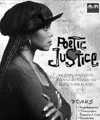
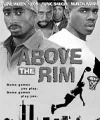
Musically, he followed up in February 1993. An early version of the album titled Troublesome 21, recorded during and after the 1992 Los Angeles riots, had been rejected by the label, according to Pearlman's research, because of its lyrics against the police; Tupac then gave the album a new name. Strictly 4 My N.I.G.G.A.Z. entered the chart at No. 24, went platinum and included I Get Around and Keep Ya Head Up, an anthem to women and their dignity. Tupac read the title as "Never Ignorant, Getting Goals Accomplished."
Around the same time THUG LIFE came into being, originally meant politically: as an indictment of a society that abandons its children. Tupac had the two words tattooed across his stomach. With Mutulu Shakur he wrote a 26-point code of conduct for the street, and he founded the group of the same name, whose only album, Thug Life: Volume 1, came out in September 1994.
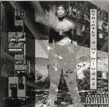
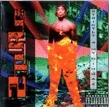
In 1993, in Los Angeles, he met a young rapper from Brooklyn: Christopher Wallace, soon known as The Notorious B.I.G. The two became friends, visited each other in New York and Los Angeles, and Tupac brought Biggie on stage at his own concerts. After the 1994 robbery, the friendship broke apart.
Picture pages
Film Roles
Six film roles in six years: Bishop in Juice (1992), Lucky in Poetic Justice (1993), Birdie in Above the Rim (1994), Tank in Bullet, Spoon in Gridlock’d and Rodriguez in Gang Related.
The last three films came out only after his death.
Framed in red: shown large in the biography
Crossed out: rejected
 1
 2
 3
 4567
 89
 10
 11
 12
 13
 14
 15
 16
IX
Charges and Trials
From 1993 on, the charges piled up. Between 1993 and early 1995 alone, Tupac was arrested six times. Some cases ended in convictions, others in acquittals or were dropped. But the first case, which followed him until his death, never came before a criminal court.
On August 22, 1992, Marin City celebrated its 50th birthday with a festival, and Tupac, who by then lived in Oakland, came back as a star. According to his lawyer, he posed for photos and signed autographs for more than an hour, until a group of locals went after him and his stepbrother Maurice Harding, supposedly over disparaging remarks about Marin City in a radio interview. The lawyer for the other side described it this way: Tupac drew a pistol, dropped it and shouted to Harding to pick it up. Several shots were fired. On a schoolyard nearby, six-year-old Qa'id Walker-Teal was riding his bicycle; a bullet struck him in the forehead. It came from a .380-caliber Colt pistol registered to Tupac. Police held Tupac for twelve hours, Harding for several days. No one was charged; there was a lack of evidence and witnesses. The boy's parents sued both of them. In November 1995, a day after opening statements, the parties settled; according to the San Francisco Chronicle, a record company paid between $300,000 and $500,000, and the case file was sealed. The festival, one of the oldest Black community festivals in Northern California, was no longer held after the boy's death, the San Francisco Chronicle wrote in 1995. Tupac said later that the boy's death haunted him.
In the spring of 1993, Tupac lost his role in Menace II Society, and he found out through MTV News. Shortly afterwards he allegedly attacked director Allen Hughes during the video shoot for the rapper Spice 1's Trigga Gots No Heart; on Yo! MTV Raps he bragged about it. In February 1994 he was found guilty of assault. On March 10, 1994, Judge George H. Wu imposed a fine, community service and 15 days in the Los Angeles County jail, which he was to begin serving on May 10, 1994. At a concert at Michigan State University in East Lansing in April 1993, he allegedly went after the rapper Chauncey Wynn with a baseball bat; the bat was part of the show, Tupac said. In September 1994 he pleaded guilty to a misdemeanor. In April 1994, police stopped him with Maurice Harding on Hollywood Boulevard; a loaded pistol was said to have been under his seat.
On October 30, 1993, Tupac performed at a college in Atlanta. In the early hours of October 31, downtown, he shot at two men who turned out to be off-duty police officers: the brothers Mark and Scott Whitwell, who were out with their wives celebrating Scott's wife passing the bar exam. One was hit in the abdomen, the other in the buttocks. The accounts contradicted each other. Police at first spoke of a car that had nearly run down the couples in front of a hotel, but conceded that one of the officers had pointed a gun at Tupac's group; whether they identified themselves as police was unclear. Tupac's lawyer, Kenneth Ellis, said the brothers had been harassing a Black motorist and that one of them had fired first. "When shots were fired, they were returned." Tupac was arrested at his hotel, charged with two counts of aggravated assault and released on bail. Scott Whitwell later admitted that he had been carrying a gun taken from an evidence room. The case never went to trial: prosecutors dropped all charges, against both sides.
The gravest case was in New York. In November 1993, a 19-year-old woman accused Tupac and three companions of sexual assault, committed on November 18 in his room on the 38th floor of the Parker Meridien hotel. According to her account, the two had gotten close at a nightclub four days earlier. Tupac denied the accusations; the defense spoke of jealousy. His lawyer Michael Warren declared at the outset that the authorities wanted to get Tupac over a lyric about killing police officers; in the trial itself, as the New York Times observed, race played no role. His co-defendant was his road manager, Charles Fuller; a third man, Jacques Agnant, was tried separately and pleaded guilty to a lesser offense, and a fourth was never found. The jurors deliberated for three days in sequestration, unaware that Tupac had been shot in the meantime. On December 1, 1994, the jury of nine women and three men acquitted him of forcible sodomy and of three weapons counts over the guns in the hotel room, but convicted him of first-degree sexual abuse.
At sentencing on February 7, 1995, the woman said she had been dazzled by the star and had lived in fear ever since; she was getting threatening phone calls, and while he was glorified by his peers and fans, she was cast as the villain. About 35 supporters sat in the courtroom, and some young women were crying. Prosecutor Melissa Mourges asked for the maximum sentence: he was only 23, but had a history of violence and could not control his temper. Tupac apologized to the woman but stressed: "I'm not apologizing for a crime." He had been so busy with his career that he had not seen this coming. He accused Judge Daniel P. Fitzgerald of never having looked him in the eye. The judge spoke of brutal violence against a helpless woman. Charles Fuller, who had no prior record, received four months in jail and five years' probation. The woman stood by her account; a later civil suit ended in a settlement.
X
Shots in the Lobby at Times Square
On the night of November 30, 1994, while the jury was still deliberating, Tupac was to record a verse for the rapper Little Shawn at Quad Recording Studios on Seventh Avenue, near 48th Street. By his account he was to be paid $7,000 for it, money he needed, because the lawyers had eaten up his funds. Shortly before, he had recorded a verse for DJ Ron G free of charge. With him were his friend Stretch, Stretch's acquaintance Fred, and Zayd, his sister's boyfriend. A man in camouflage stood by the door and did not look up as they passed; Tupac, who had just smoked weed, thought nothing of it. At about 12:25 a.m., three men attacked him in the lobby, two of them with pistols. His companions lay down on the floor; Tupac, in his own words, stood there frozen. He fought back, was beaten and shot, and lost jewelry worth around $40,000.
Wounded, he rode the elevator up to the studio. He asked someone for a joint and called his girlfriend to tell his mother. Present, as he described it, were Sean Combs, The Notorious B.I.G. and label head Andre Harrell, among others, and no one would look him in the eye. At Bellevue Hospital, the trauma surgeon Stuart Marcus counted ten entry and exit wounds, consistent with five shots: two grazing wounds to the head, one through the left hand, one through the right thigh. In an operation lasting about an hour and a half, the doctors placed a steel coil in a blood vessel to stop the bleeding. Only in the hospital did Tupac realize that bullets had also grazed his head; he had thought he had been pistol-whipped.
A few hours after the shooting he checked himself out of Bellevue Hospital; his lawyer, Michael Warren, spoke of security problems caused by the police and would not say where his client had been taken. The first police officer Tupac had seen after the shooting was, of all people, an officer who had testified against him at trial. On the morning of December 1 he sat in the courtroom in a wheelchair, head and hand bandaged, in a black tracksuit, reading newspaper reports about the attack on him; the jury was not to think he was putting on an act. Some jurors nudged each other when he was wheeled in. In the afternoon he was absent because his injured leg had gone numb; he did not hear the verdict in the courtroom. Afterwards he lay in Metropolitan Hospital, 70 blocks farther north, where a caller asked whether he was dead yet. He was discharged on December 2.
He spent the following weeks recovering at the home of the actress Jasmine Guy, guarded by the Fruit of Islam and former Panthers. He had nightmares; a psychiatrist spoke of post-traumatic stress. From then on he often wore a bulletproof vest. After the robbery, Billy Garland got in touch again, and father and son saw each other for the first time since Tupac's early childhood.
Tupac was convinced he had been lured into a trap. He suspected people from the Bad Boy label's circle who were in the building that night; they denied it. Police treated the crime as a robbery. "We have no reason to believe it was anything but a robbery," a spokesman said a few days later.
Friends became adversaries. They had been friends since 1993, and Tupac had supported the younger Biggie. On February 21, 1995, when Tupac was already in prison, the song Who Shot Ya? appeared on a reissue of Biggie's single Big Poppa. Many heard it as mockery of the shooting. Biggie explained that the song had been recorded before the night at the Quad and was not aimed at Tupac. In April 1995, in Vibe magazine, Tupac gave his version of the night, with names; Combs, Biggie and others he named rejected it in the same magazine in August. He also reproached his friend Stretch for not having done more. On November 30, 1995, according to police one year and about five minutes after the robbery at the Quad, Stretch was shot dead in Queens Village from a pursuing car.
The question of who was behind the robbery would not let go of the public. In March 2008, the Los Angeles Times published an article naming the music manager James "Jimmy Henchman" Rosemond as the organizer and suggesting that people around Combs had known about it. A little over a week later, the website The Smoking Gun showed that the supposed FBI documents it was based on were forged; at the end of March the paper apologized, and on April 7 it retracted the article entirely. In June 2011, Dexter Isaac, who was serving a life sentence for a murder-for-hire, wrote that he had been one of the robbers and that Rosemond had hired him. Rosemond's lawyer called that a lie. Rosemond was later convicted of other crimes: in 2012 of cocaine trafficking, in 2017 of a 2009 murder-for-hire; he is serving a life sentence. He was never charged over the attack on Tupac; according to Isaac's own account, the statute of limitations had run out anyway. The robbery never came before a court. The full story is on the page Shooting 1994.
XI
Number One from the Cell
Tupac could not raise the three-million-dollar bail. On December 23, 1994, he surrendered to the authorities; first he was held in the prison ward of Bellevue Hospital, and in early 1995 he was moved to Rikers Island. In January the journalist Kevin Powell visited him there for Vibe magazine, in a grubby white interview room. Tupac walked in without a limp, in a white Adidas sweatshirt and baggy jeans, chain-smoked Newports and admitted he was nervous. He was giving this interview in case he got killed, he said; people should get the true story.
He described his first two days in the cell as withdrawal: he no longer recognized himself, as if there were two people in the room, a bad one and a good one. Since then, he said, he had quit smoking weed, was doing about a thousand push-ups a day and reading entire books in a single day. Outside he had not been happy, only numb, in hotel rooms, from smoking and drinking. "Even though I'm innocent of the charges they gave me," he said, "I'm not innocent in terms of the way I was acting." His fellow inmates had taunted him as a gangsta rapper; he was not one, he said, he rapped about what happened to him. Thug Life was over for him. If rap wanted to be an art form, rappers had to take more responsibility for their lyrics. The mostly Black female guards treated him with respect, he said, and told him he had to change when he got out.
On February 7, 1995, Judge Fitzgerald sentenced him to one and a half to four and a half years in prison; he could be paroled after 18 months at the earliest. In February or March, accounts vary, he was transferred to Clinton Correctional Facility in Dannemora, a maximum-security prison in the far north of the state, near the Canadian border.
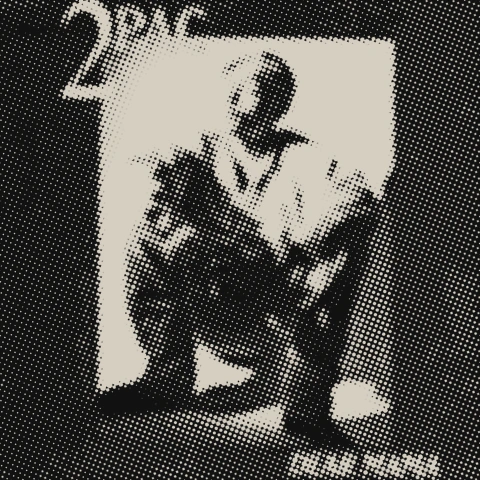
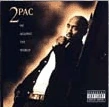
There he had his first number-one success, with an album that opens with staged news reports about the shooting at the Quad. On March 14, 1995, Me Against the World was released, recorded before his incarceration, and entered the Billboard chart at No. 1 with more than 200,000 copies sold in its first week (the Los Angeles Times reported 211,000, the Billboard chart listing 240,000), replacing Bruce Springsteen's Greatest Hits and staying on top for a month. Tupac was thus the first artist to have a number-one album while serving time in prison. The producers included Easy Mo Bee, who was working on Biggie's debut Ready to Die at the same time, the Danish duo Soulshock & Karlin, and Shock G; Death Around the Corner came from Johnny J, one of the first tracks by the two after Big Syke brought them together in late 1993.
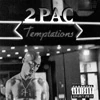
Tupac himself called it his best album yet, the Los Angeles Times by far his best, the New York Times an album about memory and grief. It was hard to listen to without thinking of him in his cell, wrote the Los Angeles Times critic. In Young Niggaz he advises boys to put down their guns and tells them they could become lawyers too. In If I Die 2Nite and the title track he describes the gangster life as a slow suicide. Yet the album ends with Outlaw, in which he tells an eleven-year-old about shootouts, backed by the sound of gunfire; after all the warnings, the New York Times noted, the cycle starts over. Dear Mama speaks without varnish about Afeni's addiction and her love, reached No. 9 on the Billboard Hot 100 and, like the album, was nominated for a Grammy; So Many Tears and Temptations followed as singles. By December 1995 the album was double platinum.
For the Temptations video, friends stepped in. Director David Nelson came up with a story set in a hotel that worked without Tupac; only a body double is briefly visible: Coolio played a bellhop, Ice-T worked the front desk, joined by Jada Pinkett, Jasmine Guy, Treach, Salt and Spinderella of Salt-N-Pepa and others. The scene was behind him. Anyone who knew him knew he was a good guy who had done a lot of stupid things, said Darryl James, editor of Rap Sheet magazine. Critics, on the other hand, asked what such support said about how people were treating his conviction.
In prison he read a great deal again, including Machiavelli's The Prince and Sun Tzu's The Art of War. He received letters from fans, girls sent him money, Madonna offered to help when he called her from jail, and the actor Tony Danza, whom he had never met, wrote to tell him to keep his head up. He publicly apologized to Quincy Jones and the Hughes brothers and planned an organization for young men called "Us First" with Mike Tyson. On April 29, 1995, he married his girlfriend Keisha Morris in prison, a student at John Jay College of Criminal Justice whom he had met at a New York club the previous summer. He did not want her to be called just his girlfriend, he reportedly said; people should take her seriously. The marriage was annulled about ten months later.
His lawyers appealed. While he awaited a decision on the appeal, bail was set at $1.4 million. Tupac did not have the money.
XII
Freedom for $1.4 Million
The legal fees had ruined him, and Afeni was at risk of losing her house. Through Keisha Morris, contact was made with Suge Knight, the head of Death Row Records in Los Angeles, the label of Dr. Dre and Snoop Dogg. According to journalist Ben Westhoff, Knight then put $15,000 on Tupac's prison account. Knight visited Tupac in Dannemora several times. On September 16, 1995, still in prison, Tupac signed a three-page handwritten contract with Death Row for three albums. On October 12, 1995, he was released because Death Row put up $1.4 million in bail; his appeal remained pending. Tupac later said that Knight had helped him when others were damaging his reputation. People around him also saw in it the search for a father figure that had accompanied him all his life.
Six days after his release, in a baggy tracksuit and a bandana, he sat in the dim control room of a studio in Tarzana and played a Los Angeles Times reporter the 14th song he had recorded since his release: 2 of Amerikaz Most Wanted, a duet with Snoop Dogg, whose murder trial in Los Angeles was beginning in those days and ended in an acquittal in 1996. In prison he had written just one song, but he had "been in the studio every waking hour since I got out," he said. With producer Johnny J he worked until people dropped, he said, and early in the morning they started again. On the new album you would feel all of the eleven months behind him: "I'm letting my anger out."

"I'm not a gangster and never have been," he said in that conversation. He was not the thief who snatches your purse, not the man who steals cars; he was just someone who fought back. Why did everyone act as if gangs were something new in America, he asked: everybody belonged to some group, the FBI, the police, the Democrats, the Republicans, and they all fought for their turf in their own way. In prison he had had to sit there "listening to Jay Leno and Rush Limbaugh and everybody making jokes" about him being shot. He called Shakespeare an author of the hardest stories: Romeo and Juliet was the story of two rival gangs. He always played his music for his mother first. He wanted a new album finished by Christmas. By then Me Against the World had already sold almost two million copies.
The months that followed were the most productive of his life: he recorded song after song, made films and videos and gathered a new crew around him, the Outlawz. The journalist Kevin Powell, who had interviewed him on Rikers, found him more aggressive after his release, as if transformed.


With Johnny J he recorded more than a hundred songs, eleven of which made it onto the next album; keyboardist Ronnie King, who played on the sessions, spoke of "seven or eight tracks a day." His stepbrother Mopreme later said that one reason the two got along so well was that both were "workaholics." Many recordings from his last year were released only after his death.
The Outlawz included a cousin, a stepbrother, a godbrother and other friends from Tupac's circle. The core was the group Dramacydal, who could already be heard on Me Against the World: his cousin Katari Cox, Malcolm Greenidge, Yafeu Fula and Mutah Beale. They were joined by Hussein Fatal and, at first, by Big Syke and Tupac's stepbrother Mopreme from the group Thug Life. Tupac gave them noms de guerre after rulers and military leaders: Fula became Yaki Kadafi, Greenidge E.D.I. Mean, Cox Kastro, Beale Napoleon. They made their debut with When We Ride. He soon called himself Makaveli.
The justice system stayed on his heels. In April 1996, Judge Khan in Los Angeles sentenced him to 120 days in jail for violating the terms of his probation from earlier convictions for assault and for carrying a concealed weapon, and for failing to complete a roadside work detail. Still pending was the case over the loaded pistol that police said they had found under his seat on Hollywood Boulevard in April 1994. His lawyer, David Kenner, appealed, and Tupac remained free. "They can lock me up for 120 years," he said after the hearing, "I'm still richer than all of them." On the way out he called to the city's representative, Bernie Brown, asking why he hadn't simply given him the 60 days he himself had proposed.
XIII
Two Albums at Once
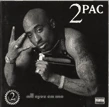
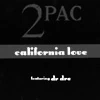
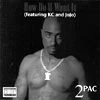
On February 13, 1996, All Eyez on Me was released. With 27 songs and 133 minutes of music, the double album is considered rap's first double album, at least according to the New York Times in 1996. In one stroke it fulfilled two of the three albums in his contract. It had been planned for Christmas 1995, but Tupac recorded so much that the date slipped. It sold 566,000 copies in its first week, was five times platinum by April 1996, and went diamond (ten times platinum) in 2014. California Love with Dr. Dre and How Do U Want It with K-Ci & JoJo reached No. 1 on the Billboard Hot 100 as a double single; California Love was later nominated for a Grammy. The producers included Dr. Dre, DJ Quik, DJ Pooh and Johnny J. The Los Angeles Times found him more venomous after prison than before, but at the height of his powers, and considered the quiet I Ain't Mad at Cha perhaps the best song he had ever recorded: a letter to a friend who has left street life behind. Interscope had changed partners in the meantime: Time Warner had pulled out under pressure from rap's opponents, and in February 1996 the MCA group bought in for $200 million.

Two weeks after the release, on February 28, Tupac was on stage at the Grammys at the Shrine Auditorium in Los Angeles. He himself was nominated twice, for Me Against the World as best rap album and for Dear Mama, and went home empty-handed. Together with the band KISS he presented an award. The Versace suit he wore that evening was shown by the Grammy Museum in an exhibition almost twenty years later.
The tone was different from Me Against the World: louder, more triumphant, often party, often threat. By now Tupac was in open conflict with Bad Boy. He accused The Notorious B.I.G. and Sean Combs of having known about the robbery at the Quad, which both denied. At the Soul Train Music Awards at the end of March 1996, in the same venue, Me Against the World won best rap album, ahead of Coolio's Gangsta's Paradise; Biggie's One More Chance was named best song. In March, Dr. Dre also left Death Row after a falling out. In June 1996, the B-side of the single How Do U Want It carried the diss track Hit 'Em Up, Tupac's open attack on Biggie, Bad Boy and their circle. The quarrel between two labels from the East and West Coasts became a feud, and two deaths, in Atlanta and in Queens, fed it further, according to the New York Times. A son of Louis Farrakhan reportedly tried to mediate between the two sides.


1996 was a packed year. At the end of June, Tupac flew with his girlfriend Kidada Jones, Quincy Jones's daughter, and his bodyguard Frank Alexander to men's fashion week in Milan, where he walked the runway for Versace in a gold velvet suit. On July 4 he gave the concert in Los Angeles that was later released as Live at the House of Blues. On August 15 he spoke with Snoop Dogg at a rally in Los Angeles meant to get young people to vote. He shot Gridlock'd and Gang Related; Bullet, filmed with Mickey Rourke in 1994 before his imprisonment, came out in the fall of 1996. His former teacher Donald Hicken later saw, in an improvised scene with Rourke, exactly the actor he had taught in Baltimore. In 1995 he had bought his mother a house in Stone Mountain, Georgia, six bedrooms on almost a hectare of land.
He kept making plans. Tupac had begun writing screenplays and put together a group of women writers to give his characters credible voices. He set the first meeting for Tuesday, September 10, 1996, at his apartment in the Wilshire House. In August, under the new name Makaveli, he recorded most of another album in just seven days at Can-Am Studios in Tarzana, with the beats coming mainly from Hurt-M-Badd and Darryl "Big D" Harper. In early September, the Death Row and Bad Boy camps clashed once more at the MTV Video Music Awards in New York. A few weeks before his death, he said in an interview with the San Francisco radio station KMEL that he had learned in prison that he could not change: "This is the life they gave me. This is the life I made for myself."
XIV
Seven Days in Las Vegas
On the evening of September 7, 1996, Tupac watched the fight between Mike Tyson and Bruce Seldon at the MGM Grand in Las Vegas with Suge Knight and a large Death Row group. His girlfriend Kidada Jones had come along; the two were staying at the Luxor hotel. The fight lasted only 109 seconds. Shortly afterwards, in the hotel lobby, a Death Row associate pointed out Orlando Anderson, a member of the South Side Compton Crips who had allegedly robbed him of a Death Row chain at a mall in Lakewood in July or August. Tupac and Knight's people beat Anderson up, and the hotel's cameras recorded the scene. Security was still holding Anderson when the group left the building; he did not file a complaint.
After a stop at the Luxor, Tupac and Knight changed clothes at Knight's house in the southeast of the city. Their destination was Club 662 on East Flamingo Road, where a party was raising money for a boxing gym where a police officer was getting young people off the street. Knight drove a black BMW 750iL, Tupac sat in the passenger seat, and about ten cars followed behind. Tupac was not wearing his bulletproof vest that evening. At around 11:15 p.m. they stopped at a red light at the intersection of East Flamingo Road and Koval Lane, in front of the Maxim Hotel. A white Cadillac with four occupants pulled up on the right, and about 13 shots were fired from the back seat. Tupac was hit four times: twice in the chest, in the arm and in the thigh. Knight suffered shrapnel wounds to the head. Bodyguard Frank Alexander was not in the car. Knight turned around and sped toward Las Vegas Boulevard until police stopped the car, with two flat tires, on Harmon Avenue.

At University Medical Center, Tupac underwent several operations. On Sunday the doctors removed his right lung to stop the internal bleeding; he was kept in an induced coma and on a ventilator. The hospital set up a recorded message, updated every hour: the patient in the trauma unit was not allowed flowers, but cards were fine. On Sunday alone, more than a thousand people called; on Monday the press office counted around 1,400 calls. On some days that week, according to hospital spokesman Dale Pugh, up to 10,000 calls came in, most of them from fans. Dozens of friends and relatives kept vigil in the lobby and on the driveway. His mother was there; she declined an interview with a Las Vegas Sun reporter and politely apologized for it. Jesse Jackson, who was just launching a voter registration drive in Las Vegas, came to his bedside on Sunday and prayed with Afeni; members of the Nation of Islam and Tupac's labelmate Hammer came as well. At first the doctors put his chances of survival at one in five; on Tuesday they said he was doing a little better; by Thursday they would no longer give a prognosis. Reportedly, Tupac stirred only once, when a friend played him Don McLean's "Vincent," the song he had danced to as a student in Baltimore.
Outside, the week went on differently. Knight, discharged on Sunday evening, did not go to the police until Wednesday and said he had heard something but seen nothing. Investigators reviewed the video from the MGM Grand; anonymous police sources spoke of a pretty bad beating. Las Vegas police contacted their colleagues in Los Angeles, because shots had been fired there in the same week, and their colleagues in New York. In Compton there were several shootings in those days, some of which local police interpreted as retaliation for the attack; in individual cases they denied any connection.
On Friday morning, the Las Vegas Sun reported that Tupac had come through a critical phase. A doctor explained that only one in five patients with a chest wound like that survives, and that a second danger comes after five to seven days. On Friday, September 13, 1996, at 4:03 p.m., he died of respiratory and cardiac failure resulting from the gunshot wounds. He was 25 years old. He had been in a coma to the end; the police had never been able to question him. A crowd gathered outside the trauma center, most of them young. Some wept, some poured something from their bottles onto the ground. About an hour after his death, a vehicle took the body to the Clark County coroner's office, where the autopsy took place that same evening.
The next day his body was cremated, and the family said goodbye in Las Vegas in a small circle. After the shooting in New York, he had made it clear to his mother that he did not want anyone looking down at him in a casket, a family source told the Los Angeles Times; Afeni also did not want anyone to apologize for him, his lyrics or his life. "My son is dead, and he doesn't deserve to be talked about like a common criminal," Billy Garland told Rolling Stone four days later. There was no public funeral; a memorial at the Wilshire Ebell Theatre in Los Angeles was canceled because, in Knight's words, the 1,200-seat hall was too small. On September 18, MTV premiered the video for I Ain't Mad at Cha, which Tupac had co-directed with J. Kevin Swain about a month earlier; it begins with him being gunned down. Within two weeks, All Eyez on Me climbed from No. 69 to No. 6 on the Billboard chart.
Witnesses kept silent, and the police made little headway. Their only evidence was the number of shots and the traces at the scene, an investigator said. At the end of September they offered a $1,000 reward and complained that witnesses from the motorcade came to questioning with as many as three lawyers. In early October, more than 300 officers searched 37 houses in and around Compton; among the 23 people arrested was Orlando Anderson. Suge Knight had to go to prison for nine years because the fight at the MGM Grand violated the terms of his probation. Yafeu "Yaki Kadafi" Fula, who had been in the car behind Tupac, told investigators that same night that he might be able to recognize the shooter; he was never questioned about it in depth. The details of the night of the shooting are on the page Shooting 1996, and The Last Week tells the story of the whole week.
XV
The Posthumous Albums
Tupac left behind a large stockpile of unreleased recordings. As early as November 5, 1996, The Don Killuminati: The 7 Day Theory was released under the name Makaveli, recorded the previous summer. It sold around 664,000 copies in its first week and knocked the Beatles' Anthology 3 off the No. 1 spot. Opponents of gangsta rap such as the activist C. DeLores Tucker saw in the records' success nothing but corporate greed. Vibe music editor Sheena Lester countered that Tupac had spoken universal truths about the lives of young Black men in America.
Afeni Shakur watched over the work, together with the lawyer Richard Fischbein, for whom she had worked as a paralegal in 1971. Afeni inherited her son's fortune. During his lifetime, Tupac had sent his mother $16,000 a month. At the end of 1997 the estate was valued at eight to ten million dollars, plus almost 200 unreleased recordings that, by some estimates, could be worth up to 100 million dollars. "I was never supposed to have money," Afeni said, "and now look where Pac has brought me." The estate fought with Death Row over money: the label demanded repayment of $7.1 million in alleged advances and loans, while Fischbein accused Death Row of inventing the debts and diverting 50 million dollars from Tupac's royalty accounts. In September 1997, Death Row dropped its claim in a settlement. After a meeting with Suge Knight at the prison in San Luis Obispo in the summer of 1997, Afeni was allowed to release around 100 recordings from the Death Row period. A year after Tupac's death he still had two albums on the charts, including the soundtrack to Gang Related, at the time the third best-selling album in the country. In 1997 she founded the label Amaru Records; the company behind it is called Amaru Entertainment. "For the first time since his death, I can smile about something," she said. The masters of All Eyez on Me and The Don Killuminati stayed with Death Row; Amaru was allowed to reissue the four early Interscope albums, and the label was distributed through Jive Records.
The first Amaru record, R U Still Down? (Remember Me), came out on November 25, 1997, with recordings from the years before prison, sold around 549,000 copies in its first week and reached No. 2. A year later came the Greatest Hits, with four previously unknown songs, including Changes; the double album was later certified diamond. Then came Still I Rise with the Outlawz (1999), Until the End of Time (2001), which went to No. 1 again, Better Dayz (2002), the soundtrack to Tupac: Resurrection (2003), Loyal to the Game (2004), produced by Eminem and also a No. 1, and Pac's Life (2006). Most of them went platinum; Pac's Life was the first of these albums to receive no certification from the U.S. industry association. For many of the late records, producers built new music around old vocal tracks, and with every album the supply grew smaller.
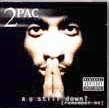 R U Still Down?1997
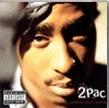 Greatest Hits1998
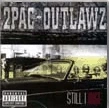 Still I Rise1999
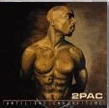 Until the End of Time2001
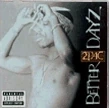 Better Dayz2002
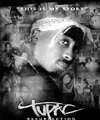
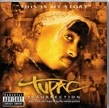 Tupac: Resurrection2003
Afeni also founded a foundation, today called the Tupac Amaru Shakur Foundation, which supports young people in the arts. In 2005 she opened an arts center for young people in Stone Mountain, which closed again in 2015. In 1999 Tupac's poetry collection The Rose That Grew from Concrete was published, with poems from his youth; many of them are on our Poems page. He could also still be seen on screen: in Bullet (1996), Gridlock'd and Gang Related (both 1997).

In December 1997, a Los Angeles court rejected Billy Garland's claim to half of the estate. The DNA test had confirmed him as the father, but all he could document was $820, a bag of peanuts and a movie ticket. His contributions to Tupac's support had been negligible, Judge Arnold Gold found. Then there were lawsuits from outside: C. DeLores Tucker demanded ten million dollars over lines about her on All Eyez on Me, Orlando Anderson 1.5 million over the beating at the MGM Grand, and a woman who had been caught in crossfire at one of his concerts in 1993 and left partially paralyzed; a court in Arkansas awarded her $16.6 million, and Afeni appealed. In September 1997, Afeni in turn sued Orlando Anderson over Tupac's death; Anderson denied any involvement. In 1999, she and Voletta Wallace, the mother of The Notorious B.I.G., jointly called for reconciliation at the MTV music awards.
Afeni scattered part of the ashes in her garden in Stone Mountain, where eggplants, corn and tomatoes had until then grown only modestly. After that the garden went crazy, she said: "Pac made this place come alive." A planned interment of the ashes in Soweto for the tenth anniversary of his death in 2006 she postponed a week before the date, to June 2007. Most of the ashes reportedly rest in her hometown of Lumberton, on a plot of land looked after by a cousin. Afeni Shakur died on May 2, 2016, at a hospital near her home in Sausalito, California; that evening an emergency call had come from the house about a possible cardiac arrest. Since then her estate has been managed by a trustee, Tom Whalley, who had once signed Tupac to Interscope. In 2022 Sekyiwa Shakur sued him, alleging that he had paid himself millions. Whalley denies this.
XVI
Honors and Legacy
Tupac is one of the most successful musicians of his generation. In the United States alone, the industry association RIAA has certified a good 40 million of his albums, the Makaveli record included; the frequently cited figure of more than 75 million records sold worldwide is based on label and press claims that no one has independently verified. The documentary Tupac: Resurrection, told almost entirely in his own voice, opened in theaters in November 2003 and was nominated for an Oscar, competing with Super Size Me, among others. "We had no reason to believe something like this could happen," Afeni said. On June 23, 2010, the Library of Congress added Dear Mama to the National Recording Registry, the sound archive of the United States, as a moving tribute to all mothers who hold a family together against addiction, poverty and indifference. Only recordings that are at least ten years old and culturally, historically or artistically significant are admitted. On April 15, 2012, a projection of him stood on stage at Coachella next to Dr. Dre and Snoop Dogg. In 2014 the musical Holler If Ya Hear Me, built on his songs, ran at the Palace Theatre on Broadway, directed by Kenny Leon, with Saul Williams in the lead role. The production had cost eight million dollars but never grossed more than $175,000 a week and closed after six weeks.
On April 7, 2017, Tupac was inducted into the Rock & Roll Hall of Fame in his first year of eligibility, the first solo rapper in its history; Snoop Dogg gave the induction speech. His former teacher Donald Hicken thought the artist in him would have been pleased, while the revolutionary would have shunned such honors. On June 16, 2017, his 46th birthday, the biopic All Eyez on Me opened. In April 2023 Allen Hughes's documentary series Dear Mama about Afeni and Tupac premiered. On June 7, 2023, he received a posthumous star on the Hollywood Walk of Fame, accepted by Sekyiwa Shakur. Even at 13, on the stage of the Apollo, her brother had dreamed of that star, she said.
Academia took him seriously early on. At the University of California, Berkeley, a student taught a seminar on his lyrics as early as the fall of 1997, which according to the Associated Press drew around 100 students; in April 2003 Harvard held a symposium titled "All Eyez on Me: Tupac Shakur and the Search for the Modern Folk Hero." Rolling Stone lists him among the 100 greatest artists of all time. Many of today's rappers cite him, and his face can be seen on murals in New York, Brazil, Sierra Leone and Bulgaria. In 2023 the estate-authorized biography by Staci Robinson was published; Afeni had commissioned it as early as 1999. The manuscript had sat for years until the estate brought Robinson back for a documentary and a museum exhibition about Tupac's life.
Cities remember him too. Oakland declared June 16 Tupac Shakur Day and in 2023 renamed a stretch of MacArthur Boulevard "Tupac Shakur Way"; in May 2026 Baltimore did the same with a section of Greenmount Avenue near his teenage home, where as early as 2016 strangers were taking photos several times a month. Mutulu Shakur was released in December 2022 after almost 37 years in prison because of a cancer diagnosis, and died in July 2023. Literature takes up Tupac as well: Angie Thomas named The Hate U Give after his THUG LIFE motto, and the film adaptation was released in 2018. In February 2026, the Recording Academy inducted All Eyez on Me into the Grammy Hall of Fame, and in May E.D.I. Mean accepted the honor on his behalf.
XVII
A Verdict After Thirty Years
For almost three decades, no one was charged in the killing. A year after the crime, the weapon had not been found, and no witness had implicated anyone. Orlando Anderson, named as a suspect early on, was arrested in a raid in Compton in October 1996 but never charged in connection with Tupac. He denied any involvement and in turn sued the estate over the beating at the MGM Grand; Las Vegas police, by their own account, never had direct evidence against him. On May 29, 1998, he died at the age of 23 in a shootout at a car wash in Compton, apparently in a dispute over money. Yafeu "Yaki Kadafi" Fula of the Outlawz had already been shot dead in New Jersey in November 1996. In March 1997, The Notorious B.I.G. was also killed in Los Angeles by shots fired from a car.
Of all things, it was the investigation into Biggie's death that brought the turning point. In May 2006, a joint task force of police and federal agencies in Los Angeles reopened the case, led by Greg Kading. At the end of 2008, in his lawyer's office, it questioned Duane "Keffe D" Davis, Anderson's uncle and a former leader of the South Side Compton Crips. Investigators had evidence that he had sold PCP, and he was facing life in prison. Under a so-called proffer agreement, under which his statements were not to be used against him (it was not immunity), he said unprompted, according to a former investigator: "The other was us." In a further interview he described how the crime came about: after the fight at the MGM Grand, he and his companions had gone looking for Tupac and Knight. Ten years earlier he had told the FBI that he had stayed at his hotel that evening and that his nephew had not been involved. In March 2009 he was registered as a confidential informant; Las Vegas police knew nothing about it at the time. Kading was taken off the task force shortly afterwards, left the police force and made the statement public in a book in 2011. Davis repeated the story in a 2018 television documentary, saying he had been in the Cadillac and the shots had come from the back, and in his 2019 book Compton Street Legend. None of the three men he placed in the car was still alive by then: Anderson had been shot dead in 1998, DeAndre Smith had died of natural causes in 2004, and Terry Brown in a shooting in Compton in 2015.
In early 2018, Las Vegas police assigned a new investigator to the case. In July 2023 they searched a house belonging to his wife in Henderson and seized computers, photos and a copy of the book. After at least five sessions over three months, a grand jury returned an indictment, and Davis was arrested on September 29, 2023. He pleaded not guilty, and prosecutors chose not to seek the death penalty. In January 2024, Judge Carli Kierny set bail at $750,000 with house arrest; in June she nevertheless refused to let him go, because she had doubts about where the money came from. The trial was postponed several times. Motions to dismiss the charges failed. Over a fight with a fellow inmate, Davis was sentenced to 16 to 40 months in a separate case.
In the spring of 2026 his defense attorney withdrew, and Michael Sanft took over the case without a fee. At the end of April, Tupac's stepbrother Mopreme Shakur filed a wrongful death lawsuit in Los Angeles over Tupac's death against Davis and unknown co-conspirators. The judge admitted Davis's book and the recording of the 2008 interview as evidence. Without the book, prosecutor Marc DiGiacomo had said at the hearing, Davis would probably never have been prosecuted. In August 2026 the trial began in Las Vegas, with twelve jurors and four alternates. Sanft called Davis's book an invention for money; his client had not even been in Las Vegas that night. The jury heard Davis's contradictory statements from 1998 and 2008 and watched the television interview. On August 25, Malcolm Greenidge testified, known as E.D.I. Mean of the Outlawz, who had witnessed the shooting. After 24 witnesses the prosecution rested; the defense called three witnesses. Davis himself did not testify.
On August 31, 2026, after just under three hours of deliberation, the jury found Davis guilty of first-degree murder with a deadly weapon. The prosecution had earlier dropped the allegation that he acted for the benefit of a gang. It had not claimed that he fired the shots himself, but that he obtained the weapon and set the attack in motion. Who pulled the trigger has not been established in court. The family said it was thrilled and relieved; Sanft announced an appeal. A few days later, in an interview, Davis again denied having been in Las Vegas that night.
On October 13, 2026, Judge Kierny handed down the sentence: 40 years to life, made up of two consecutive terms of 20 years to life each; she credited him with 731 days already served. "You cannot take a person from their family," she said, and: "It took 30 years, but now you must answer for what you did on September 7, 1996." Before the sentence was pronounced, the family spoke. Sekyiwa Shakur called her brother a father figure to her, and Tupac's stepbrother Mopreme asked for the longest possible sentence. Davis did not address the family; he only asked for the things seized from him to be returned. The 63-year-old cannot hope for parole for at least 40 years. According to the prosecution, no further charges against others involved are planned for lack of evidence. Davis announced in the courtroom that he would "for sure" appeal; the verdict is not final (as of October 2026). All the details are on the Investigation page and in the dossier The Keffe D Case.
Sources
187 sources. Text updated: October 22, 2026.
- 1TIME (2023): Afeni Shakur und der Panther-21-Prozesstime.com
- 2The New Yorker (30.10.2023): Rezension von Staci Robinson, „Tupac Shakur: The Authorized Biography“newyorker.com
- 3People: All About Tupac Shakur's Parents and Siblingspeople.com
- 4New York Amsterdam News (13.09.2016): Tupac Amaru Shakur: Native Harlemiteamsterdamnews.com
- 5Baltimore Magazine: Tupac Shakur spent his formative years in Baltimorebaltimoremagazine.com
- 6Marin Magazine: Tupac Shakur's life in Marinmarinmagazine.com
- 7New York Times (30.11.1994): Rap Artist Tupac Shakur Shot in Robberynytimes.com
- 8New York Times (02.12.1994): Wounded Rapper Gets Mixed Verdict in Sex Abuse Casenytimes.com
- 9New York Times (08.02.1995): Rapper Faces Prison Term for Sex Abusenytimes.com
- 10Billboard: Me Against the World: Jubiläumsartikel (Chartstart Nr. 1)billboard.com
- 11NBC News (2023): Tupac Shakur's stepfather reflects on freedom after 35 years behind barsnbcnews.com
- 12Rolling Stone (2016): Afeni Shakur, Mother of Tupac Shakur and Activist, Dead at 69rollingstone.com
- 13Rock & Roll Hall of Fame: Tupac Shakur (Aufnahme 2017)rockhall.com
- 14Hollywood Walk of Fame: Tupac Shakur erhält posthum einen Sternwalkoffame.com
- 15CBS News (2010): Tupac Shakur honored by Library of Congresscbsnews.com
- 16Installation International: Musion Eyeliner projects Tupac's ghost at Coachella (2012)installation-international.com
- 17The Assembly: Tupac Shakur und Lumberton (Grabstätte der Asche)theassemblync.com
- 18CBS News (31.08.2026): Guilty verdict in Tupac Shakur's 1996 murdercbsnews.com
- 19NPR (01.09.2026): Jury convicts a man of first-degree murder for the 1996 killing of Tupac Shakurnpr.org
- 20Al Jazeera (01.09.2026): Keffe D found guilty of killing Tupac Shakur (Prozessbeginn, Strafmaßtermin)aljazeera.com
- 21Staci Robinson: Tupac Shakur. The Authorized Biography (Crown 2023, Penguin 2024), Leseprobe Kapitel 1 und 2cdn.penguin.co.uk
- 22The Hollywood Reporter (2023): Auszug aus Robinsons Biografie zu „Juice“hollywoodreporter.com
- 23New York Times (12.05.1988): 2 Ex-Fugitives Convicted of Roles in Fatal Armored-Truck Robberynytimes.com
- 24Los Angeles Times (23.09.1992): Quayle Calls for Pulling Rap Album Tied to Murder Caselatimes.com
- 25New York Times (02.11.1993): Rapper Charged in Shootings of Off-Duty Officersnytimes.com
- 26Washington Post (03.11.1993): Guns N' Rappers: 3 Arrested in Shootingswashingtonpost.com
- 27New York Times (03.12.1994): Rapper, Shot and Convicted, Leaves Hospital for Secret Sitenytimes.com
- 28Vibe (April 1995, Kevin Powell): Ready to Live, Interview auf Rikers Islandvibe.com
- 29Los Angeles Times (12.03.1995): Tupac Shakur's Grim New 'World'latimes.com
- 30New York Times (09.04.1995): Confessions of a Rapper Who Done Wrongnytimes.com
- 31Los Angeles Times (24.09.1995): 2Pac's Pals Turn Out for Tupac-Less Videolatimes.com
- 32Los Angeles Times (25.10.1995): Tupac Shakur: 'I am not a gangster'latimes.com
- 33San Francisco Chronicle (08.11.1995): Settlement in Rapper's Trial for Boy's Deathsfgate.com
- 34Los Angeles Times (11.02.1996): 2Pac: Bitter, Remorseless, Brilliantlatimes.com
- 35Los Angeles Times (01.04.1996): It's a Soul Train Awards Joy Ride for TLC, D'Angelolatimes.com
- 36San Francisco Chronicle (06.04.1996): Rapper Sentenced for Violating Probationsfgate.com
- 37Las Vegas Sun (11.09.1996): Rapper on way to charitable eventlasvegassun.com
- 38New York Times (14.09.1996): Tupac Shakur, 25, Rap Performer Who Personified Violence, Diesnytimes.com
- 39New York Times (16.09.1996): Shots Silence Angry Voice Sharpened by the Streetsnytimes.com
- 40Rolling Stone (31.10.1996, Kevin Powell): Tupac Shakur: 1971-1996rollingstone.com
- 41Los Angeles Times (14.11.1996): All Eyes on Shakur's 'Don Killuminati'latimes.com
- 42Las Vegas Sun (06.09.1997): The death of Tupac Shakur one year laterlasvegassun.com
- 43Los Angeles Times (13.09.1997): Shakur's Mother Files Wrongful-Death Suitlatimes.com
- 44Los Angeles Times (30.10.1997): Amaru Label to Release Shakur CDslatimes.com
- 45People (01.12.1997): All Eyes On Her (Afeni Shakur)people.com
- 46Los Angeles Times (10.12.1997): Father of Tupac Shakur is denied share of estatelatimes.com
- 47Los Angeles Times (30.05.1998): Possible Suspect in Tupac Shakur Death Killed in Shootoutlatimes.com
- 48Chicago Tribune (28.01.2005): Tupac doc up for Oscarchicagotribune.com
- 49Billboard (23.06.2010): Tupac, Willie Nelson, R.E.M. among inductees to National Recording Registrybillboard.com
- 50MTV News (2014): Broadway-Musical „Holler If Ya Hear Me“ wird abgesetztmtv.com
- 51MTV News (30.05.2013): Tupac Would Have 'Outshined' 'Menace II Society,' Director Admitsmtv.com
- 52Baltimore Sun (31.03.2017, Wesley Case): Tupac Shakur in Baltimore: Friends, teachers remember the birth of an artistbaltimoresun.com
- 53Vibe (12.11.2016): How '2Pacalypse Now' Marked The Birth Of A Rap Revolutionaryvibe.com
- 54KQED: It's Tupac Day in Oakland, Where He Once Sued the Police for $10 Millionkqed.org
- 55AP (23.04.2021): Shock G, off-kilter Digital Underground leader, dead at 57news4jax.com
- 56Rolling Stone (07.06.2023): Tupac Shakur Finally Receives a Star on the Hollywood Walk of Famerollingstone.com
- 57AP (29.09.2023): Festnahme von Duane „Keffe D“ Davisapnews.com
- 58Los Angeles Times (21.08.2026): How the killing of Biggie Smalls brought a big break in the Tupac murder mysterylatimes.com
- 59KTNV (13.10.2026): Duane 'Keefe D' Davis to serve 40 years to life in prisonktnv.com
- 60NBC News (13.10.2026): Duane ‘Keffe D’ Davis sentenced to 40 years in prisonnbcnews.com
- 61Grammy.com: Digital Underground, Nominierungen (33. Grammy Awards 1991, The Humpty Dance)grammy.com
- 62Complex (22.12.2025): 13 New Things We Learned About Tupac From the Biography „Only God Can Judge Me“complex.com
- 63KQED (30.08.2023): Leila Steinberg, Tupac Shakur's First Manager: I 'Still Feel Him' Herekqed.org
- 64Complex (23.03.2022): 2Pac's Childhood Poetry Book Expected to Fetch $300K at Auctioncomplex.com
- 65Segal Center CUNY (12.05.2021, Elizabeth M. Cizmar): Subversive Inclusion: Ernie McClintock's 127th Street Repertory Ensemblethesegalcenter.org
- 66NBC News (10.07.2023): Mutulu Shakur, Black liberation activist and stepfather to Tupac, dies at 72nbcnews.com
- 67NPR (26.09.2025): Assata Shakur, a fugitive American activist, dies in Cubanpr.org
- 68Seattle Times (26.06.1993): Texas case puts rap music on trial along with killerarchive.seattletimes.com
- 69Davidson v. Time Warner, Inc., 1997 WL 405907 (S.D. Tex. 1997), Fallzusammenfassungquimbee.com
- 70Los Angeles Times (07.04.2008): The Times retracts Tupac Shakur storylatimes.com
- 71ABC News (16.06.2011): Inmate confesses to 1994 robbery of Tupac Shakurabcnews.com
- 72U.S. Attorney's Office EDNY (05.06.2012): James Rosemond convicted of leading a continuing criminal enterprisejustice.gov
- 73U.S. Attorney's Office SDNY (08.11.2018): James Rosemond sentenced to life in prison for ordering the murder of Lowell Fletcherjustice.gov
- 74XXL: R.I.P. Stretch (21.08.1968-30.11.1995)xxlmag.com
- 75The Hollywood Reporter/AP (27.03.2008): L.A. Times sorry for Tupac Shakur storyhollywoodreporter.com
- 76Tampa Bay Times/AP (14.10.1995): Tupac Shakur out on $1.4 million bailtampabay.com
- 77NME (25.07.2019): Tupac Shakur's prison ID card breaks world record after being sold at auctionnme.com
- 78Rolling Stone (06.07.2016): What Happened to the Tupac Amaru Shakur Center for the Arts?rollingstone.com
- 79Billboard (12.01.2022): Tupac's Sister Says Trustee 'Embezzled Millions' From Mother's Estatebillboard.com
- 80RIAA Gold & Platinum: Zertifizierungen 2Pacriaa.com
- 81Las Vegas Sun (10.09.1996): Fan calls flood UMC's switchboardlasvegassun.com
- 82Las Vegas Sun (10.09.1996): Tupac Shakur's friends, Metro square off at UMClasvegassun.com
- 83Las Vegas Sun (11.09.1996): Tupac seen in fight on videolasvegassun.com
- 84Las Vegas Sun (13.09.1996): Tupac Shakur improves slightlylasvegassun.com
- 85Las Vegas Sun (16.09.1996): Retaliation for Shakur suggestedlasvegassun.com
- 86Las Vegas Sun (19.09.1996): Tupac's final music video eerily foreshadowed death of rapperlasvegassun.com
- 87Las Vegas Sun (28.09.1996): Police Ask for Public's Help in Shakur's Shootinglasvegassun.com
- 88Los Angeles Times (14.09.1996): Rapper Tupac Shakur, 25, Dies 6 Days After Ambushlatimes.com
- 89Los Angeles Times (18.09.1996): Police Find No Shakur Tie to Compton Slayingslatimes.com
- 90Los Angeles Times (03.10.1996): Police Raids Target Violence Sparked by Shakur's Deathlatimes.com
- 91Frank Alexander, Heidi Siegmund Cuda: Got Your Back (St. Martin's 2000), S. 104 (Mailand)books.google.com
- 92UPI (10.03.1994): Rap singer sentenced to 15 days in LA jailupi.com
- 93Grammy.com (11.02.2026): GRAMMY Hall of Fame 2026: inducted recordingsgrammy.com
- 94The Source (03.10.2018): 'The Hate U Give' Star-Studded Soundtrack to Feature 2Pac, Kendrick Lamar and Othersthesource.com
- 95MTV News (08.09.1997, Wayback): Majoring In Tupac: Shakur's Poetry Inspires Courseweb.archive.org
- 96Sotheby's (2022): Jamal Joseph Remembers the Poetry of Tupac Shakur (Video)sothebys.com
- 97Great American Trials via Encyclopedia.com: Tupac Shakur Trial, 1994-95encyclopedia.com
- 98XXL (Sept. 2011): Mourn You 'Til I Join You: 2Pac's favorite producer Johnny Jxxlmag.com
- 99XXL (Sept. 2011): Love Is Not Enough: 2Pac's Ex-Wife, Keisha Morrisxxlmag.com
- 100AP/KTAR: Chronologie der Ermittlungen im Mordfall Tupac Shakurktar.com
- 101Las Vegas Sun (02.10.1996): 22-year-old arrested in Tupac Shakur killinglasvegassun.com
- 102Pollstar (03.10.2011): New Light On Tupac, Biggie Smalls Shootingsnews.pollstar.com
- 103Billboard (2018): Tupac Shakur murder suspect's uncle says he knows the killer (Death Row Chronicles)billboard.com
- 104NBC News (17.07.2023): Search warrant executed in Tupac Shakur murder casenbcnews.com
- 1058 News Now (2023): Witness tells grand jury who killed Tupac Shakur8newsnow.com
- 106NPR (02.11.2023): Tupac Shakur murder suspect pleads not guiltynpr.org
- 107Spokesman-Review/AP (09.01.2024): Tupac's accused killer Duane 'Keffe D' Davis granted bailspokesman.com
- 108Rolling Stone (26.06.2024): Keffe D bleibt in Haft (Herkunft des Kautionsgeldes)rollingstone.com
- 109Las Vegas Review-Journal (21.01.2025): Judge refuses to dismiss case against Tupac Shakur slaying suspectreviewjournal.com
- 110Las Vegas Review-Journal (02.09.2025): Tupac Shakur murder suspect sentenced to prison for jailhouse fightreviewjournal.com
- 111FOX5 Vegas (06.08.2026): Defense attorney in Tupac Shakur murder trial took case pro bonofox5vegas.com
- 112Rolling Stone (28.04.2026): Tupac Shakur's family files wrongful death lawsuitrollingstone.com
- 113Las Vegas Review-Journal (30.06.2026): Judge rules memoir by defendant in Tupac killing case is admissiblereviewjournal.com
- 114The Source (30.07.2026): Keefe D 2008 police interview allowed in Tupac murder trialthesource.com
- 115Las Vegas Review-Journal (13.08.2026): Jury selected for Tupac Shakur murder trialreviewjournal.com
- 116Las Vegas Review-Journal (2026): Keffe D's conflicting Tupac accounts take center stage at trialreviewjournal.com
- 117Las Vegas Review-Journal (25.08.2026): 'I'm horrified': Witness to shooting of Tupac Shakur testifiesreviewjournal.com
- 118Las Vegas Review-Journal (26.08.2026): Prosecution rests in trial of Tupac Shakur slaying suspectreviewjournal.com
- 119Rolling Stone (01.09.2026): Tupac's family reacts to Keffe D guilty verdictrollingstone.com
- 120NBC News (01.09.2026): Duane Davis' lawyer plans appeal of Tupac Shakur murder convictionnbcnews.com
- 121The Hollywood Reporter (04.09.2026): Duane 'Keffe D' Davis claims innocence (Interview)hollywoodreporter.com
- 122Courthouse News (13.10.2026): Duane Davis sentenced to 40 years in prison for murder of Tupac Shakurcourthousenews.com
- 123PBS NewsHour/AP (13.10.2026): Duane 'Keffe D' Davis gets 40 years to life in prison for orchestrating Tupac Shakur's murderpbs.org
- 124Las Vegas Review-Journal (13.10.2026): Man who orchestrated killing of Tupac Shakur to learn his sentencereviewjournal.com
- 125Wikipedia (Einstieg): Tupac Shakuren.wikipedia.org
- 126Wikipedia (Einstieg): Murder of Tupac Shakuren.wikipedia.org
- 127Wikipedia (Einstieg): Panther 21en.wikipedia.org
- 128Wikipedia (Einstieg, abgerufen 19.10.2026): 127th Street Repertory Ensembleen.wikipedia.org
- 129Wikipedia (Einstieg): All Eyez on Me (Singles, Videodreh, Grammy-Nominierung California Love)en.wikipedia.org
- 130Wikipedia (Einstieg): 38th Annual Grammy Awardsen.wikipedia.org
- 131Wikipedia (Einstieg): Who Shot Ya?en.wikipedia.org
- 132Wikipedia (Einstieg): Me Against the World (Produzenten, Charts)en.wikipedia.org
- 133Wikipedia (Einstieg): Outlawzen.wikipedia.org
- 134Wikipedia (Einstieg): Death Row Recordsen.wikipedia.org
- 135Wikipedia (Einstieg): The Don Killuminati: The 7 Day Theoryen.wikipedia.org
- 136MTV News (13.09.1996, Wayback): Rapper Tupac Shakur Gunned Downweb.archive.org
- 137MTV News (27.09.1996, Wayback): Tupac Memorialsweb.archive.org
- 138Las Vegas Sun (09.09.1996): 4 sought in Shakur shootinglasvegassun.com
- 139Las Vegas Sun (18.09.1996): Hospital, cops swamped with calls about Shakurlasvegassun.com
- 140Los Angeles Times (19.09.1996): Record Executive Breaks His Silence on Shakur's Deathlatimes.com
- 141MTV News (20.09.1996, Wayback): Suge Speaks Out About Tupacweb.archive.org
- 142Billboard 200, Chart vom 28.09.1996 (All Eyez on Me: Platz 18, Vorwoche 69)billboard.com
- 143Billboard 200, Chart vom 05.10.1996 (All Eyez on Me: Platz 6, Vorwoche 18)billboard.com
- 144Chronicle of Philanthropy (12.12.2006): Actress Donates $1-Million to Baltimore Schoolphilanthropy.com
- 145Tampa Bay Times/AP (28.09.1995): Time Warner to sell rap label (50-Prozent-Anteil an Interscope)tampabay.com
- 146Randall Sullivan: LAbyrinth (Atlantic Monthly Press 2002), Angabe zum Nussknacker nach Wikipedia „Tupac Shakur“ (Buch nicht eingesehen)en.wikipedia.org
- 147Biography.com: Tupac Shakurbiography.com
- 148New York Times (19.07.1970): Joan Bird and Afeni Shakur, Self-Styled Soldiers in the Panther 'Class Struggle'nytimes.com
- 149Encyclopedia.com (Great American Trials): Weatherman Brinks Trials: 1983encyclopedia.com
- 15098.3 TRY/iHeart: 2Pac's First Poetry Book Might Be Auctioned Off For Up To $300,000 (24.03.2022)983try.iheart.com
- 151Wikipedia (Einstieg): Afeni Shakuren.wikipedia.org
- 152Wikipedia (Einstieg): Mutulu Shakuren.wikipedia.org
- 153Wikipedia (Einstieg): Beginnings: The Lost Tapes 1988-1991en.wikipedia.org
- 154Wikipedia (Einstieg): Same Songen.wikipedia.org
- 155Wikipedia (Einstieg): 2Pacalypse Nowen.wikipedia.org
- 156Free Speech Center (MTSU): Rap Music and the First Amendment (Davidson v. Time Warner)firstamendment.mtsu.edu
- 157Wikipedia (Einstieg): Juice (1992 film)en.wikipedia.org
- 158The Daily Beast (02.02.2019): John Singleton Looks Back on Poetic Justice, Tupac, Janet Jackson and That AIDS Test Rumorthedailybeast.com
- 159TheWrap (2019): John Singleton Told Tupac to Quit Rapping (And 5 More of His Amazing Hollywood Stories)thewrap.com
- 160Wikipedia (Einstieg): Above the Rimen.wikipedia.org
- 161Wikipedia (Einstieg): Strictly 4 My N.I.G.G.A.Z.en.wikipedia.org
- 162Wikipedia (Einstieg): Thug Life (group)en.wikipedia.org
- 163Wikipedia (Einstieg): Billy Garland (activist)en.wikipedia.org
- 164NPR (16.06.2011): On What Would Have Been His 40th, Talk About What Led To Tupac's Deathnpr.org
- 165Wikipedia (Einstieg): List of Billboard 200 number-one albums of 1995 (Me Against the World, 240.000)en.wikipedia.org
- 166Vice (12.09.2016, Ben Westhoff): How Tupac and Biggie went from friends to deadly rivalsvice.com
- 167XXL (06.02.2015): Tupac letters at Bonhams (handschriftlicher Vertrag vom 16.09.1995)xxlmag.com
- 168Bonhams: Los 1342, Tupac Shakur, Brief und Vollmacht vom 30.07.1995 (Vertrag vom 16.09.1995)bonhams.com
- 169Rolling Stone: Tupac Exhibit to Open at Grammy Museum (16.01.2015)rollingstone.com
- 170Wikipedia (Einstieg): Bullet (1996 film)en.wikipedia.org
- 171Wikipedia (Einstieg): Amaru Entertainmenten.wikipedia.org
- 172Daily News Südafrika (07.09.2006): Tupac's ashes not coming to SA this yeardailynews.co.za
- 173Wikipedia (Einstieg): Tupac Shakur discography (RIAA-Zahlen)en.wikipedia.org
- 174Harvard Gazette (April 2003): Symposium analyzes, celebrates 'thug'news.harvard.edu
- 175iHeart (12.05.2026): 2Pac Honored With Street Dedication in Baltimoreiheart.com
- 176The Source (Sha Be Allah, 11.05.2026): Tupac's All Eyez On Me and Eric B. & Rakim's Paid in Full inducted into the Grammy Hall of Famethesource.com
- 177AP via FOX 5 New York (19.07.2023): Tupac case: Las Vegas police took laptops, documents from home searched in rapper's 1996 killingfox5ny.com
- 178Los Angeles Times: Man Named as Suspect in Death of Shakur Sues the Rapper's Estate (10.09.1997)latimes.com
- 179AP via News4Jax (30.06.2026): Book that Tupac Shakur murder suspect wrote is clear for use in the trial, judge rulesnews4jax.com
- 180FindLaw (2026): Wrongful death lawsuit filed by Tupac Shakur's stepbrother almost 30 years after shootingfindlaw.com
- 181MTV News, 18.03.1997: Special Report on the Murder of Tupac Shakur (Wayback, eidesstattliche Erklärung der Polizei Compton: Juli oder August 1996)web.archive.org
- 182TODAY, Sarah Lemire (13.10.2023): The history behind Jada Pinkett Smith and Tupac Shakur's relationshiptoday.com
- 183Biography.com, Colin McEvoy (20.09.2023): Jada Pinkett Smith and Tupac Had an 'Inseparable' Bond of Survival and Successbiography.com
- 184AP via WMAR-2 News (2017): Jada Pinkett Smith talks Tupac friendship, drug dealing pastwmar2news.com
- 185The Blast (17.10.2023): Jada Pinkett Smith regrets jarring last words to Tupac Shakur (The Diary of a CEO)theblast.com
- 186People via Yahoo News, Daniel S. Levine (21.09.2023): Jada Pinkett Smith Shares Clip of Her and Tupac Doing a 'Terrible Job' Lip-Syncing to a Will Smith Songca.news.yahoo.com
- 187Billboard: Digital Underground, Chart History Hot 100 (The Humpty Dance: Höchstplatz 11, 02.06.1990)billboard.com
List of Figures
- 1Tupac in a striped beanie with the Thug Life lettering (AI-generated)2
- 2Tupac with his mother Afeni Shakur (AI-generated)10
- 313
- 4Tupac as a child (AI-generated)13
- 5Geronimo Pratt, Tupac’s godfather.14
- 6Tupac as a child with two younger children (AI-generated)15
- 7Tupac as a child with two other children (AI-generated)15
- 8Tupac at about three, in dungarees (AI-generated)15
- 9Tupac as a teenager with two friends on some steps (AI-generated)16
- 10Tupac as a teenager in a group (AI-generated)17
- 1117
- 1218
- 13Tupac in a loose jacket (AI-generated)18
- 14Tupac in a tank top, sitting (AI-generated)18
- 15Tupac in an Oakland Athletics jersey with a microphone on stage (AI-generated)19
- 16Tupac and Shock G in colourful outfits on a concert stage (AI-generated)20
- 17Shock G of Digital Underground.21
- 1821
- 19Tupac with two companions (AI-generated)21
- 20Tupac rapping on stage, early 1990s (AI-generated)22
- 21Tupac rapping on stage next to another rapper (AI-generated)23
- 222Pacalypse Now, 1991.23
- 23Brenda’s Got a Baby, single.23
- 24Tupac on a film set, wearing a cap and a chain (AI-generated)24
- 25Juice, 1992.25
- 26Poetic Justice, 1993.25
- 27Above the Rim, 1994.25
- 28Strictly 4 My N.I.G.G.A.Z., 1993.25
- 29Thug Life: Volume 1, 1994.25
- 3030
- 31Dear Mama, single from 1995.32
- 32Me Against the World, 1995.32
- 33So Many Tears, single.32
- 34Temptations, single.32
- 35Tupac with Suge Knight (AI-generated)34
- 36Tupac in a tuxedo next to Suge Knight (AI-generated)35
- 37Tupac and Snoop Dogg in suits (AI-generated)35
- 38Suge Knight, head of Death Row Records.35
- 3935
- 40Tupac in a leather vest and bandana at the photo shoot for All Eyez on Me (AI-generated)36
- 41Tupac in a tank top with jewelry (AI-generated)37
- 42Tupac with Snoop Dogg (AI-generated)37
- 43All Eyez on Me, 1996.37
- 44California Love, single.37
- 45How Do U Want It, single.37
- 4638
- 47Tupac with Mike Tyson (AI-generated)39
- 48The Rose That Grew from Concrete, 1999.40
- 49Tupac with the Outlawz (AI-generated)41
- 50Tupac: Resurrection, 2003.43
- 51Snoop Dogg.43
- 5243
All pictures from the fan material of united-tupac.com and thuglove.de (2002 to 2012), set in grayscale for this edition, never enlarged. Covers and posters: works of their respective rights holders.
Index
- 2Pacalypse Now22
- Above the Rim24
- Afeni Shakur10
- All Eyez on Me36
- Assata Shakur14
- Billy Garland10
- Brenda's Got a Baby22
- California Love36
- Dear Mama32
- Digital Underground18
- Geronimo Pratt14
- Greg Kading44
- group24
- How Do U Want It36
- I Get Around24
- Investigation44
- Jada16
- Jada Pinkett16
- Jamal Joseph14
- Johnny J34
- Keep Ya Head Up24
- Keisha Morris32
- Kenneth "Legs" Saunders12
- Kidada Jones36
- Leila Steinberg18
- Me Against the World32
- Mopreme Shakur14
- Mutulu Shakur14
- Names and Aliases12
- Orlando Anderson38
- Outlawz34
- Poems40
- Poetic Justice24
- Sekyiwa14
- sentence44
- Shock G20
- Shooting 199430
- Shooting 199638
- Snoop Dogg42
- Stretch30
- Strictly 4 My N.I.G.G.A.Z.24
- Strictly Dope18
- Suge Knight34
- The Don Killuminati: The 7 Day Theory40
- The Keffe D Case44
- The Last Week38
- Underground Railroad20
Read on
- Lesane, Tupac, 2Pac, Makaveli: A Life in Names
- Concerts and Live Appearances: What Is Documented
- The timeline, 1968 to today
- The shootings of 1994 and 1996
About this edition
Text updated October 22, 2026.
United-Tupac.Com, the German Tupac Shakur site. A fan site since 2002.
Back to the cover