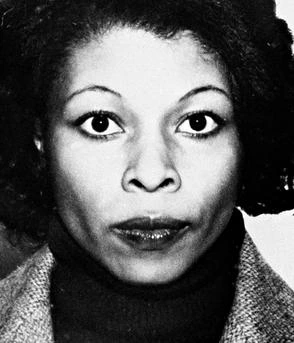
To some she was a freedom fighter, to others a convicted cop killer on the run. To Tupac, Assata Shakur was family: he regarded her as his godmother. She is sometimes called “Tupac’s aunt”true in the sense of the political Shakur family, though the two were not related.
From JoAnne Byron to Assata Shakur
She was born JoAnne Deborah Byron on July 16, 1947, in Flushing, Queens; a short marriage gave her the surname Chesimard, under which U.S. records still list her. In the early 1970s she dropped it and called herself Assata Shakur. Like Mutulu Shakur, she was one of the young activists who saw Saladin Shakur, the father of Lumumba and Zayd Shakur, as a surrogate father. She was a member of the Black Panther Party and later of the Black Liberation Army (BLA), an armed underground group.
May 2, 1973
In the early hours of May 2, 1973, two New Jersey state troopers stopped a car on the New Jersey Turnpike near East Brunswick for a broken taillight. Inside were Sundiata Acoli, Assata Shakur and Zayd Malik Shakur. A gunfight broke out. Trooper Werner Foerster was killed and his colleague James Harper wounded. Zayd Shakur died; Assata was badly wounded in both arms. She always maintained that she shot no one and had her hands in the air when she was hit.
In several other cases involving bank robberies and shootings of police officers she was acquitted or the charges were dropped. For the Turnpike incident, however, a jury convicted her in 1977 of, among other things, Foerster’s murder; she was sentenced to life in prison.
Escape and exile
On November 2, 1979, BLA members posing as visitors entered the Clinton Correctional Facility for Women in New Jersey, took two guards hostage and got Assata out in a prison van. It is sometimes claimed that the escape happened “without armed force”that is not true. In 1988 Mutulu Shakur was convicted in part for his role in this operation.
Assata went underground and resurfaced in 1984 in Cuba, where Fidel Castro granted her political asylum. There she wrote Assata: An Autobiography, published in the late 1980s and still widely read. The case strained U.S.–Cuban relations for decades. In 2013 the FBI added her to its list of most wanted terrorists; rewards for her capture totaled two million dollars.
Her place for Tupac and hip-hop
Assata’s story became part of hip-hop culture. Public Enemy referenced her in Rebel Without a Pause in 1988, and Common dedicated A Song for Assata to her in 2000. Tupac grew up with the stories of this Panther generation. In its obituary, NPR wrote that Assata was close to the Shakur family and that Tupac considered her his godmother.
Death in Havana
Assata Shakur died in Havana on September 25, 2025, at the age of 78; Cuba’s Foreign Ministry cited health conditions and advanced age, and her daughter Kakuya Shakur confirmed the death. Supporters honored her as a symbol of resistance. New Jersey’s governor and state police said she had died without being held fully accountable and vowed to oppose any attempt to return her remains to the United States. Sundiata Acoli, also convicted over Foerster’s death, had been paroled in 2022 after 49 years in prison.