1,894 words · 9 min
The Fight at the MGM Grand on September 7, 1996
After the Tyson fight, Tupac and his entourage beat Orlando Anderson at the MGM Grand. The tape sent Knight to prison and in 2026 supplied the motive.
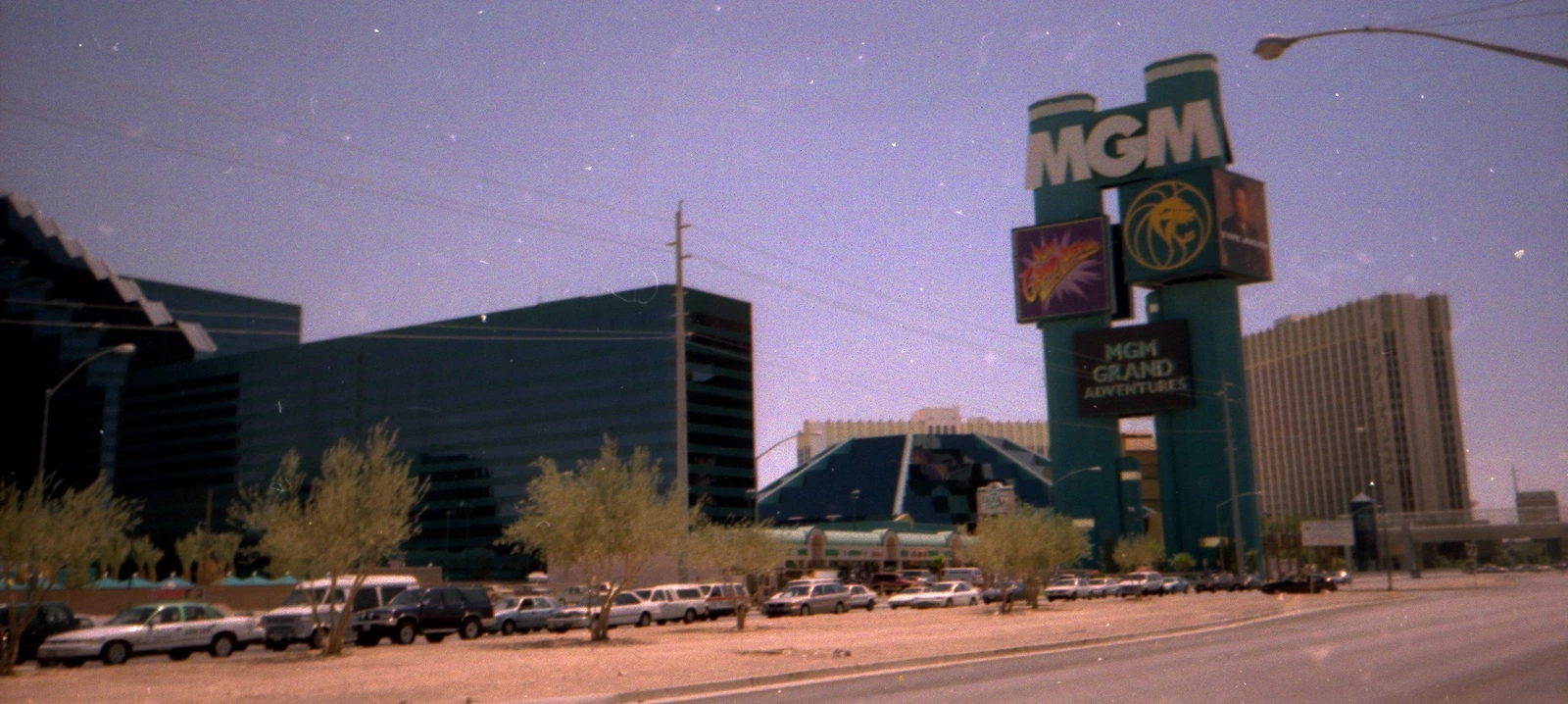
At around 8:50 p.m. on September 7, 1996, a young man in a white Dan Marino football jersey tried to push past security into the Coyote Cafe at the MGM Grand. Seconds later a group ran at him, knocked him to the floor and kicked him. The hotel cameras were rolling. The man was Orlando Anderson, and among the attackers was Tupac Shakur. A little over two hours later, the shots were fired at Tupac on Koval Lane. The police initially played the scene down. Later it moved to the center of the investigation, and in 2026 it opened the murder trial in Las Vegas. The rest of the evening is told on the page The 1996 Las Vegas shooting.
A title fight the arena thought was fixed
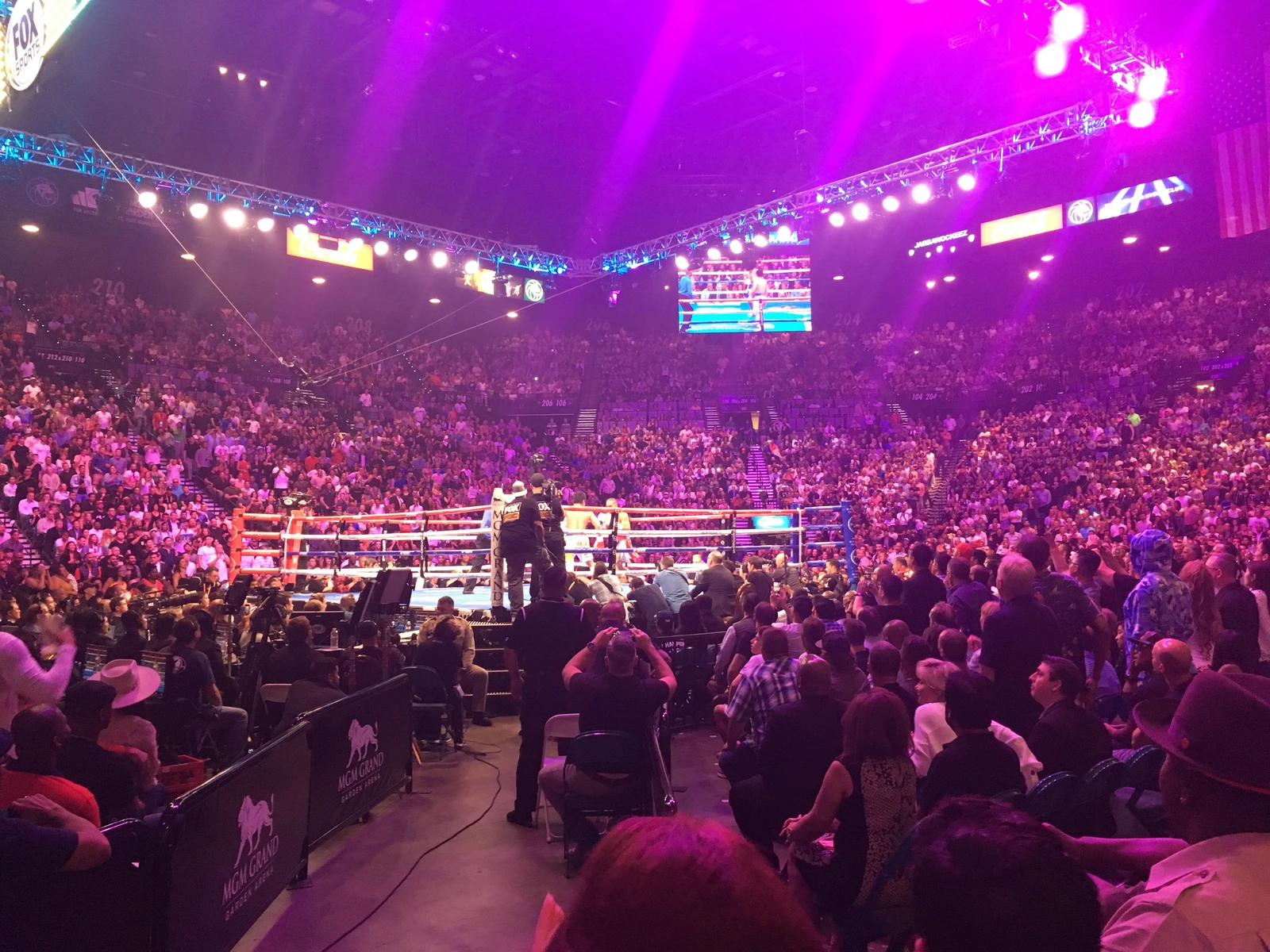
The trip was about a boxing match. Mike Tyson, a friend of Tupac’s, challenged Bruce Seldon, the WBA heavyweight champion, at the MGM Grand Garden Arena. According to the Los Angeles Times account of 2002, Tupac sat in the front row with Suge Knight, accompanied by people from the Death Row Records circle; according to the Las Vegas Sun, the crowd numbered 9,494.
Seldon was counted out 1 minute and 49 seconds into the first round. The crowd chanted “Fix!” Seldon insisted, still in the ring, that the fight had not been rigged.
A chain from the Lakewood Mall
The backstory was first told by Compton police informants, later by the Shakur family’s civil suit and in 2026 by the prosecution. According to these accounts, Southside Compton Crips attacked Travon Lane, a man from the Death Row circle and a member of the Mob Piru, at a shopping mall in Lakewood in the summer of 1996. Anderson allegedly took his Death Row medallion in the process.
The Bloods and the Crips are the two big rival gang alliances in the Los Angeles area. Death Row was closely tied to the Mob Piru Bloods from Compton, and the Southside Crips were their rivals. Former gang investigator Robert Ladd told the jury in 2026 that Knight had handed out such medallions to his entourage; taking one from someone was gross disrespect.
How solid the story is has never been settled. In 1998 the Shakur family’s civil suit spoke of “a month” before Las Vegas, the prosecution in 2026 of “months.” Under cross-examination, Ladd conceded that he could produce neither a police report nor a mall security report; he knew of the incident only from hearsay. Even the Los Angeles Times, reporting on the sentencing in October 2026, wrote that Anderson had “allegedly” snatched the chain.
A punch at the Coyote Cafe
After the fight, the Death Row group headed for the exit. According to the prosecution, Lane recognized the man from Lakewood in the hotel lobby. In 2002 the Los Angeles Times, citing anonymous sources, described what happened next: Tupac rushed at him and asked “You from the South?”, a reference to the Southside Crips. Before Anderson could answer, Tupac threw a punch.
Exactly when is not entirely clear. The MGM security report gave the time as about 8:50 p.m.; MTV, on the other hand, reported that the fight itself did not end until around 8:55 p.m.
The security report describes the scene briefly: a man in a sports jersey tried to push past security into the Coyote Cafe, and then a large group ran toward him. After the blows, the group hurried across the casino floor and outside while police officers approached the man on the floor.
What the tapes show
The video became known on September 11, 1996, while Tupac lay in a coma. Anonymous police sources told the Las Vegas Sun that Tupac, his bodyguards and members of his entourage had beaten and stomped an unidentified man, a “pretty bad beating.” A probation officer who watched the tape in November 1996 counted seven or eight attackers; one man, who “appears” to be Knight, pushes another man down and kicks him.
Thirty years later, former Death Row security chief Reggie Wright Jr. identified Tupac and Knight in the footage from the witness stand. Michael Ingram, an investigator for MGM Resorts, authenticated the recordings. The VHS tapes had been reused again and again back then, he said, and individual people were hard to identify. Judge Carli Kierny admitted the security report as a business record of the hotel over the defense’s hearsay objection, even though Ingram did not know who had written it in 1996.
Officers on the scene, but no report
Police officers working the fight arrived. Kenneth Rios, then on patrol at the MGM, asked the man whether he needed medical help and wanted to press charges. He declined both, saying strangers had attacked him. “We thought he was a victim,” Rios told the court in 2026; he remembered the first name: Orlando. By his own account, he only wrote a report once the shooting of Tupac was known.
In 1996 it sounded different. The officers who had worked the fight first assured homicide detectives that Tupac’s group had not been involved in any fight. When the Las Vegas Sun reported on the video, Manning conceded: “Metro didn’t take a report, no.” The matter was under internal review, it was said. According to MTV, investigators initially ruled the man out as the shooter because security guards were still holding him when Tupac left the hotel. For weeks the police downplayed the fight, saying hours had passed between the two incidents.
From the hotel to Club 662
Tupac went back to the Luxor, where Death Row had booked rooms. Then it was on to Knight’s house in the southeast of the city, where several members of the group changed clothes, and, at around 10:30 p.m., in a convoy to a benefit party at Club 662 on East Flamingo Road. How the drive ended is told on the pages The BMW 750iL and Flamingo Road and Koval Lane.
The man in the video gets a name
On October 2, 1996, police arrested 23 people in a raid in and around Compton, among them 22-year-old Orlando Anderson, a member of the Southside Crips according to police, who was held over a different killing. Two detectives from Las Vegas questioned him. The next morning, the Los Angeles Times still wrote that he did not appear to be the man in the hotel video.
A day later his lawyer, Edi M. O. Faal, confirmed exactly that: Anderson had been attacked at the MGM without knowing that his attacker was Tupac Shakur. “He believes he is a victim of Tupac.” Las Vegas police said he was not a suspect; on October 4 he was released.
A year later, Anderson told the Los Angeles Times that he had bought a ticket for the fight, had never seen Tupac’s companions before and was too badly hurt afterward to go after anyone. Under oath in February 1998, however, he said a security guard had let him into the arena through a back door without a ticket.
The beating puts Knight in prison
For Suge Knight, those seconds in the lobby had the harshest consequences. He was on probation for an attack on two aspiring rappers in 1992, with a nine-year prison term suspended. On October 22, 1996, he was jailed for violating his conditions, and then the video moved to the center of the case. Judge J. Stephen Czuleger watched it on November 7: “I see combative, violent behavior.”
At the hearing on November 25, Knight testified that Tupac had darted from his side and that he had yelled at the men to stop. Tupac, he said, “was a little brother to me.” Czuleger refused to admit a reenactment video with actors, asking what the difference was between it and a made-for-TV movie. Orlando Anderson testified too, and he did so for Knight: the label boss had not joined the beating but had tried to break it up.
On November 26, 1996, Czuleger ruled that Knight had been an “active participant” and revoked his probation. On February 28, 1997, he sentenced him to nine years in prison: “I can’t trust you.” Knight was released in August 2001.
The judge had disregarded Anderson’s testimony. Anderson later said he had lied at the hearing because he feared for his life; in fact, he said, Knight had punched and kicked him along with Tupac and others. In 2026, Reggie Wright Jr. recalled a meeting at which lawyers had discussed about $60,000 from Death Row for Anderson. Whether any money was paid is not known.
Lawsuit against lawsuit
On September 8, 1997, Anderson sued Tupac’s estate, Knight and Death Row employees for more than $1 million. Four days later, Afeni Shakur sued him for wrongful death. She based her allegations on the sworn affidavit with which the Compton police had applied for search warrants in September 1996 (Los Angeles Times). Anderson called this affidavit “fiction” and said Tupac had been “like a hero” to him.
Neither case reached a verdict. Anderson died on May 29, 1998, at the age of 23 in a shootout at a car wash in Compton that police attributed to a dispute over money. In July 2000, his heirs and Tupac’s estate resolved their dispute over an allegedly promised settlement of $78,000, without disclosing the amount. More on the page Orlando Anderson.
The prosecution’s motive at the 2026 trial
When Chief Deputy District Attorney Binu Palal opened the trial of Duane “Keffe D” Davis on August 17, 2026, he showed the jury the video from the lobby. Davis was Anderson’s uncle and, according to investigators, a leader of the Southside Crips. By the rules of his world, Palal told the jury, he could not let the beating of his nephew stand: “He acquired a firearm, got his group together, and went hunting for Mr. Shakur or Mr. Knight.”
The prosecution relied above all on Davis’s own words. In his book Compton Street Legend, he wrote that he and his crew had learned in Las Vegas that his nephew had been attacked in the lobby. The defense countered that nothing but his own stories placed Davis in Las Vegas that night, and that the chain story was unproven.
On August 31, 2026, the jury found Davis guilty of first-degree murder with the use of a deadly weapon, and on October 13 Judge Kierny sentenced him to 40 years to life. Davis denies the crime and has announced an appeal; the verdict is not final (as of October 2026). The verdict states no motive; the revenge story was the prosecution’s account, and no court has determined who fired the shots. More on the pages The trial of Duane Davis, The Keffe D case, Investigations from 1996 to today and Suspects at a glance.
Tupac as attacker
In many accounts of that night, Tupac is only a victim. The tape from the MGM Grand shows him first as the attacker, and by every account the fight was started by him and his companions. For Suge Knight, the scene became the road to prison; for Orlando Anderson, a suspicion he could not shake for the rest of his life. Thirty years later, the same grainy VHS images played in a Las Vegas courtroom as the explanation for why shots were fired on Koval Lane.
People in this text
Mike TysonSuge KnightAfeni Shakur: Panther, Mother, Keeper of the EstateOrlando "Baby Lane" AndersonDuane "Keffe D" Davis
More pictures