1,271 words · 6 min
Gridlock'd (1997)
Vondie Curtis Hall's dark comedy about two addicts in a bureaucratic maze: for Roger Ebert, Tupac's best performance. Released after his death.
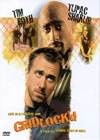
- Writer and director
- Vondie Curtis Hall (directorial debut; he also plays D-Reper)
- Producers
- Damian Jones, Paul Webster, Erica Huggins; executive producers include Ted Field and Russell Simmons
- Studios
- PolyGram Filmed Entertainment, Interscope Communications, Def Pictures, Dragon Pictures
- U.S. distributor
- Gramercy Pictures
- Cast
- Tim Roth (Stretch), Tupac Shakur (Spoon), Thandie Newton (Cookie), Vondie Curtis Hall (D-Reper), Lucy Liu
- Cinematography
- Bill Pope
- Music
- Stewart Copeland
- Filmed
- 1996, completed about two months before Tupac’s death (Entertainment Weekly)
- Premiere
- Sundance Film Festival, January 1997
- U.S. release
- January 29, 1997, according to the Los Angeles Times; Box Office Mojo lists January 31 as the start of the opening weekend
- Running time
- approx. 91 minutes
- U.S. box office
- $5.6 million, including $2.7 million on opening weekend (Box Office Mojo)
- Germany
- Gridlock’d, Voll drauf!, released August 7, 1997 (PolyGram)

For Roger Ebert, Gridlock’d was Tupac’s best acting performance. In this dark comedy he plays Spoon, a heroin-addicted musician who wants to get clean with his friend Stretch (Tim Roth) and keeps failing at government offices, waiting rooms and forms. Tupac never saw the finished film: he planned to watch it the week after the Tyson fight in Las Vegas.
Key Facts on the Film
The Story
New Year’s Eve in Detroit: the singer Cookie, who forms a jazz and spoken-word trio with Spoon and Stretch, collapses after an overdose. While she lies in the hospital, Spoon decides to quit heroin and talks Stretch into joining him. What follows is a day full of absurdities: for rehab they need Medicaid, for Medicaid they need welfare, and for everything another form. At the same time, gangsters and the police are on their trail because they appear to be involved in a double murder.
A Detroit Story: How the Film Came About
Vondie Curtis Hall, known as Dr. Dennis Hancock on the series Chicago Hope, drew on his own experiences in the screenplay. In 1997 he told the Los Angeles Times how, as a 16-year-old guitarist and singer in Detroit’s punk scene, he took heroin for the first time at a party: it was a competition, they believed it would make them play faster and write better songs. Spoon retells this party in the film. Curtis Hall had quit by the time he graduated from high school in 1974. The hardest part, he said, was not quitting but getting help: he was still living with his parents and couldn’t give an address, his friend had no Social Security card, and both were sent from desk to desk. “You have a small window of time, or you’ll never kick,” he said. The friend on whom he based Stretch later died of an overdose on his way to a rehab clinic in California.
Curtis Hall wrote Gridlock’d in 1993 in an American Film Institute workshop. He originally wanted to play the lead himself, but then followed two Hollywood rules from his agent: never self-finance, and cast a star. He sent the script to Tim Roth, who had just finished shooting Rob Roy. Roth read it on the last day of filming and called back: he loved it.
How Tupac Became Spoon
Laurence Fishburne and others had passed on Spoon when, in late 1995, Preston Holmes, the head of Def Pictures, suggested Tupac. Holmes had already co-produced Juice. Tupac had just been released from prison, and “no one wanted to touch him,” Curtis Hall recalled in the Los Angeles Times. Holmes had known him since he was a child and vouched for him: he was a professional and nothing like Hollywood’s perception of him. Curtis Hall met Tupac, liked him and introduced him to Roth, “and there was immediate chemistry.”
Tupac greatly admired Roth, Curtis Hall later told MTV News: he had seen every film Roth had made and really wanted to work with him. Roth, by contrast, said he knew nothing at all about Tupac, and that was how Tupac wanted it. Tupac asked him not to watch any of his films or videos beforehand and not to listen to the music: that was all hype and performance, he just wanted to meet Roth and talk about the characters.
A Different Tupac
Curtis Hall was convinced the film showed a different Tupac from all earlier ones. Instead of a gangster, he plays a vulnerable, funny man who recites poetry, plays bass and worries about his bandmate in a coma. In one spoken-word scene, he is on stage with Thandie Newton.
Death Before the Release
After the weekend of the Tyson fight in Las Vegas, Tupac was supposed to come into the studio to do some looping and watch the film; Curtis Hall, Roth and he wanted to be in the studio together for it. Curtis Hall described how Tupac told him on the phone that Suge Knight thought the film was great, that he was going to the MTV Video Music Awards and to Mike Tyson’s fight, and that he would come by on Monday after that. On September 7, 1996, he was shot in Las Vegas, and on September 13 he died (see Death). Afterward, some lines sounded like a premonition, such as Spoon’s line that his luck is running out. Tupac always thought he would die young, Curtis Hall said: he never expected to grow old and fall asleep in front of the TV smoking a pipe.
Release and Box Office
Gridlock’d screened at the Sundance Film Festival in January 1997 and reached U.S. theaters at the end of January. Despite good reviews, audiences stayed away: the first weekend brought in $2.7 million, the total $5.6 million. The film thus did considerably worse than the soundtrack, which topped the album charts at the same time.
Reviews
Reviews were mostly positive. Roger Ebert gave it three out of four stars and wrote that the film was more cause to mourn Shakur’s death, as he gives his best performance here. Janet Maslin (New York Times) praised his “appealing mix of presence, confidence and humor.” Desson Howe (Washington Post) found that Shakur and Roth seemed born for these roles. Variety highlighted Tupac’s relaxed screen presence and his humor. Owen Gleiberman (Entertainment Weekly) wrote that the film proves Tupac had the dynamism and flair of a major screen actor: with his “morose elegance,” he lends Spoon a tremor of sorrow, a vulnerability almost entirely at odds with his image as a rapper. John Singleton said that in this film you only begin to see Tupac’s full potential as an actor; he was still growing. The German film-dienst praised a dark comedy full of irony and sarcasm with outstanding performances. On Rotten Tomatoes, the film today stands at 88 percent positive reviews.
Soundtrack
The album came out on January 28, 1997, on Death Row and, according to MTV News, debuted at No. 1 on the Billboard album chart with more than 150,000 copies sold, ahead of No Doubt. Its main draw was Wanted Dead or Alive with Snoop Doggy Dogg; it also includes Never Had a Friend Like Me and Out the Moon (Boom, Boom, Boom). In the film, Tupac also plays bass while Newton sings. More in the Discography.
What It Meant for Tupac
Gridlock’d is the film almost everyone cites who considers Tupac a great actor. It shows him as the funny, warm-hearted partner of one of the most respected actors of his generation, without a gun and without menace. Because it only reached theaters after his death, it also became a farewell: Curtis Hall said that with this role, Tupac left behind a great legacy.
People in this text