854 words · 4 min
The Tupac Amaru Shakur Foundation and the Arts Center in Stone Mountain
Afeni Shakur's foundation, the arts center in Stone Mountain, and a new beginning: The Tupac Amaru Shakur Foundation from 1997 to the present.
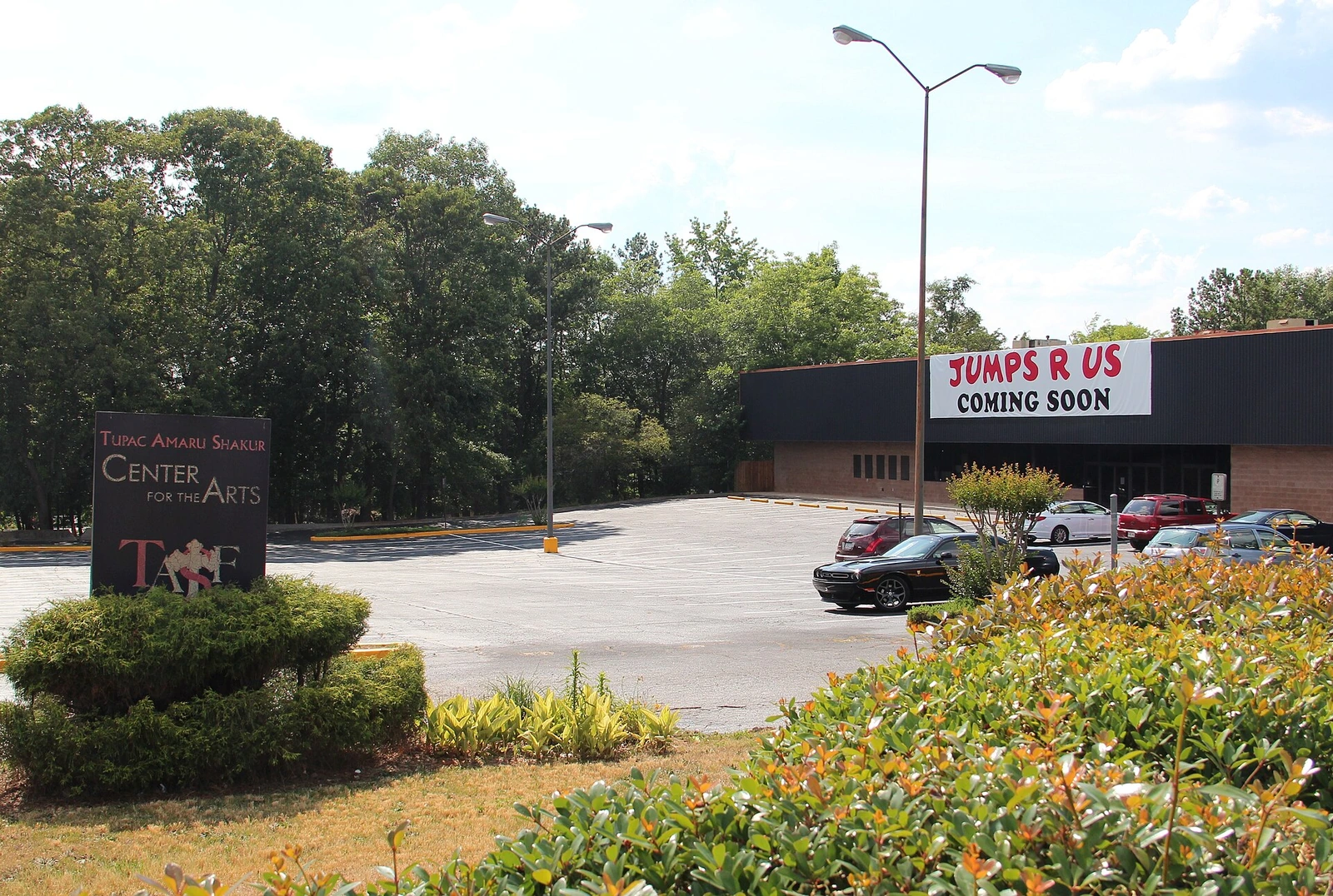
As a businesswoman she released his albums, as a benefactor she wanted to give something back to young people: Tupac’s mother Afeni Shakur managed her son’s legacy in two ways. The Tupac Amaru Shakur Foundation (TASF) endured through the decades. In contrast, its arts center in Stone Mountain near Atlanta closed after ten years. This text tells the story of both projects.
1997: What Tupac Had Learned in Baltimore
Afeni Shakur established the foundation in 1997, the year after Tupac’s death. According to its own account, the organization was initially named the Shakur Family Foundation. An annual performing arts day camp was aimed at young people from Atlanta and the surrounding area. Rolling Stone traced the initiative to Afeni seeing how much Tupac had learned at the Baltimore School for the Arts.
According to the report, instructors at the camp included actress Jasmine Guy and dance teacher Junella Segura Cooper. Attorney Dina LaPolt explained copyright law to the youth.
2005: An Arts Center for Four Million Dollars
On June 11, 2005, the Tupac Amaru Shakur Center for the Arts opened in Stone Mountain, very close to the house Tupac had bought for his mother (Rolling Stone). A former paint store became a dance studio, with gold and platinum records hanging on the walls. The former movie theater next door was likewise slated to be renovated.
Added to this was a Peace Garden with a bronze statue unveiled on September 13, 2005, before more than 1,000 guests (NME; more on the Monuments page). For fundraising, the foundation had bricks laid by the pond: donors paid up to $1,000 for bricks bearing their names, among them Eminem, Dr. Dre, Michael Jackson, and Quincy Jones.
According to Rolling Stone, the center cost four million dollars. LaPolt said in 2005 that 80 percent was paid from the proceeds of Amaru Entertainment, the company that releases Tupac’s posthumous albums (Companies).
October 2007: A Noose Around the Statue’s Neck
In the early morning hours of October 20, 2007, unidentified individuals vandalized the building and placed a noose around the statue’s neck. Authorities in DeKalb County investigated it as a hate crime, and a man was later arrested. Fliers found at the statue contained rambling references to September 11 and Hurricane Katrina, as well as threats against record labels and rappers (UPI, October 24, 2007).
Afeni Shakur reacted in a conciliatory spirit: hearts were temporarily hurt, but souls had already forgiven the perpetrators (Report).
Dwindling Revenues: The End of the Center in 2015
The center lived on the money brought in by Tupac’s music. According to Rolling Stone, the estate still earned $15 million in 2008, but two years later only a quarter of that, as the reserve of unreleased recordings dwindled. Interscope executive David Cohen, who had served on the foundation’s board since shortly after the opening, reported that the center operated on a shoestring budget. Afeni contributed substantial funds from her personal wealth.
The foundation was never able to convert the theater; “the building itself was a big mistake,” Cohen said. Afeni Shakur long resisted selling, without ever officially announcing the closure.
The price figures in the sources are inconsistent: Rolling Stone cites $1.2 million for a listing in August 2015, but $600,000 for the actual purchase by real estate investor Jim Burnett in December 2015. The article leaves open how the two figures connect; the old United-Tupac.Com page also cited $1.2 million as the sale price. The family cleared the grounds, and the statue disappeared. Afeni Shakur died on May 2, 2016, at the age of 69 (Billboard).
Plans for an Arcade and Water Park: The Site After 2015
According to Rolling Stone, buyer Burnett did not want the Shakur name to die. Plans called for offices in the former dance studio, an indoor arcade in the theater, and a water park in the garden. According to Atlanta Black Star, he called the site Peace Garden Park and Amphitheater.
In 2017, he announced a new bronze statue, which according to 2020 reports was not documented as completed (XXL, Atlanta Black Star). No later status is documented in the sources consulted.
The Foundation Today: Five Focus Areas and a Peace Pole
TASF continues its work, led by Tupac’s sister Sekyiwa Shakur, who is named as president on the foundation’s website. According to its own account (as of October 2026), its work covers five areas: mental health, youth and the arts, support for families of the incarcerated, prevention of women and child trafficking, and peace and conflict resolution.
Together with Taraji P. Henson’s foundation, TASF raised $25,000 in May 2020 for free therapy during the COVID-19 crisis, according to The Source (Report). In May 2026, Sekyiwa Shakur planted a Peace Pole in Mullan Park during the street renaming in Baltimore; according to the press release of May 8, 2026, this project aims to promote peace as an alternative to violence in communities.
The family’s legacy also includes the management of the estate; disputes are covered on the Legal Cases page.
People in this text
Afeni Shakur: Panther, Mother, Keeper of the EstateSekyiwa Shakur