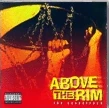
Background · Above the Rim (Soundtrack)
Two years before Tupac himself signed with Death Row Records, in 1994 he played the gangster Birdie in the basketball drama Above the Rim—one of the most memorable villains of his film career. For the label, the accompanying soundtrack was one of the first major projects after Dr. Dre's The Chronic and Snoop Doggy Dogg's Doggystyle.
A Drinking Song and Missing Cassette Tracks
On the CD, Tupac is featured with his group Thug Life: Pour Out a Little Liquor, produced by Johnny “J”, is a drinking song for fallen friends and also appeared a few months later on Thug Life: Volume 1.
Older tracklists additionally list Pain with Stretch and Loyal to the Game with Treach and Riddler. According to Wikipedia, the cassette version contained three tracks that did not fit on the CD due to space constraints-on the CD edition referenced here, both of the aforementioned tracks are missing. The bonus tracks are probably Pain, Lord G's Mi Moni Rite, and Loyal to the Game: exactly these three titles appear at the end of this tracklist, and exactly these were also released as B-sides of the maxi-single Regulate. However, this attribution is not conclusively proven.
Pain resurfaced in 2007 in a new version on Nu-Mixx Klazzics Vol. 2. In 2004, Loyal to the Game lent its name to an entire posthumous album.
Death Row Dominates the Sound
Musically, Death Row shaped the album: Warren G and Nate Dogg scored a hit with Regulate, which reached No. 2 on the Billboard Hot 100. Tha Dogg Pound featuring Snoop Dogg and Nate Dogg were heard on Big Pimpin', The Lady of Rage on Afro Puffs. Added to this were R&B contributions from SWV, H-Town, Al B. Sure!, and Jewell. At the 1995 Source Awards, the album was named Soundtrack of the Year.
Jeff Pollack's film was released in theaters in March 1994. More on that on the Above the Rim page.
Gaps in the Details
Older entries give only “1994” as the year and “Death Row” as the label, and omit the track runtimes. For spellings like “The Dog Pound” and “CPO/Boss Hog”, the correct form is used here. The fact that the tracklist back then deviated from the CD on the final songs proved in retrospect to be a valuable clue to the missing cassette tracks.